HR guide to fixed-term contracts: Managing and supporting temp hires


Disclaimer: This content is for general informational purposes only and does not constitute legal advice. Leapsome does not guarantee legal compliance and cannot confirm how specific situations would be assessed in court. If you're unsure how the requirements apply to your organization, please consult qualified legal counsel.
Fixed-term contracts are great for workforce planning, since they add a touch of predictability. But there are new challenges to worry about too, like how to offer a strong employee experience to temp hires.
After all, just because someone applies for this type of role doesn’t mean it’s what they really want. According to the U.S. Bureau of Labor Statistics, about 45% of contingent workers said they’d have preferred permanent jobs.*
While “contingent work” covers more than fixed-term contracts, this finding still exposes a tension HR teams shouldn’t ignore: short-term arrangements may meet business needs without giving employees what they want. That disconnect can weaken engagement and performance long before contracts expire.
In this article, we’ll talk about what fixed-term roles mean for the employer and employees alike. We’ll also explain how to use these contracts as workforce planning tools, without creating a second-class experience.
* BLS, 2024
What’s a fixed-term contract?
A fixed-term contract employs someone for a set period of time. The arrangement may be tied to a specific end date, a particular project, or some other clearly defined business need.
Organizations often use these contracts to cover temporary workload spikes or bring in specialist expertise. Fixed-term employment contracts are a useful part of your workforce strategy whenever you need immediate capacity, but you can’t justify a permanent position.
There are a lot of ways to handle fixed-term employment, but just about all arrangements share these components:
- Finite business need: The role exists to handle work the organization expects to end in the near future, such as parental leave cover or a time-bound project.
- No automatic continuation: The employment relationship doesn’t continue indefinitely. Extension or conversion to a permanent role requires a deliberate decision.
- Employee status: Fixed-term workers are employees, not independent contractors, although their protections and benefits depend on local employment laws and the contracts you draw up.
Why fixed-term contracts create engagement and planning challenges
Fixed-term employment can work well for both sides of the arrangement. Your organization benefits from workforce flexibility, while employees gain specialized experience or test-drive a new type of role.
“At the end of the day, it’s a contract — we’re paying for a service, and employees provide it. The market changes the power dynamics, not the value of people.”
– Melanie Naranjo, Chief People Officer at Ethena
But because fixed-term work comes with a clear expiration date, companies often treat these employees as temporary in every other sense. They limit access to development programs and leave them out of important growth conversations. This keeps fixed-term team members on the outskirts of the organization, even when their work sits at the center of key projects.
How to manage fixed-term employees successfully: Four HR strategies
The issue really isn’t whether a role is permanent or not; it’s whether the employee feels connected enough to do their best work while they’re still around. Here are four ways to build that connection and drive performance.
1. Clarify contract expectations early on to avoid surprises
No matter how long an employee will work with your company, they need clearly defined expectations and an honest timeline. Make sure both the employee and their manager know why the job is fixed-term, and lay out exactly how their role overlaps with and diverges from their permanent team members.
So there’s no room for confusion, store the contract and role details in a centralized employee record. This gives HR and managers one reliable source of information throughout the employment period.
“Gaps rarely come from a lack of effort. More often, they result from fragmented systems, unclear ownership, outdated documentation, or people data that hasn’t been reviewed consistently over time.”
– Sammie Masley, People and Talent Partner at Leapsome
If renewal is an option, the team member should also know when your organization will review their role and who will communicate the outcome.
It’s tempting to delay that conversation, especially when business needs remain uncertain. But avoiding the topic encourages employees to plan around the worst-case scenario. So instead of waiting for silence to become the message, share communication milestones before the contract begins, and set reminders to make sure those conversations actually happen.
2. Give fixed-term employees access to meaningful development
Gallup found that organizations investing strategically in employee development report 11% greater profitability on average. Yet some companies don't get that full benefit, since they reserve training mainly for permanent employees. Remember that development supports current performance, not just long-term tenure.
In other words, a temporary contract end date should shape your development plan, not erase it. Instead of treating career conversations as irrelevant, focus on what the employee needs to succeed in the role and what skills they want to build during their time with your company. That might include role-specific learning or access to an experienced mentor.
3. Keep up with feedback and performance management
Fixed-term employees sometimes receive less feedback, because managers see the temporary employment contract as too short or transactional to dedicate more time than necessary. This means the first serious performance conversation only happens when there's a significant problem, or when the organization is considering renewal.
That’s too late for feedback to make any real difference. In order to perform well, fixed-term workers need the same clarity about expectations and progress as everyone else. And to keep their morale high, they also need recognition that confirms their work counts.
SHRM found that employees with positive experiences were 68% less likely to consider leaving. A fixed-term employee may eventually depart by design, but disengagement before that date still affects the work they deliver and can even convince them to end the contract early.
“Disengaged employees who stay quietly can drain a company faster than those who leave. Engagement isn’t about who stays; it’s about who contributes with energy and ownership.”
– Emma Leeds, Founder, CEO, and Chief People Consultant at People Function
Regular performance conversations also give HR better evidence when assessing whether the role should continue. Without that record, contract decisions depend too heavily on recent impressions.
To keep performance visible and show employees they belong to the team (not just the HR system), you need to include them in regular check-ins and feedback cycles. If you're worried about the added admin cost, Leapsome has you covered.
“When trying to use that system as the one point of truth, all the HR data is in there, all the documents are saved in there.”
– Erica Ancobia, CEO and Managing Director at KUNO
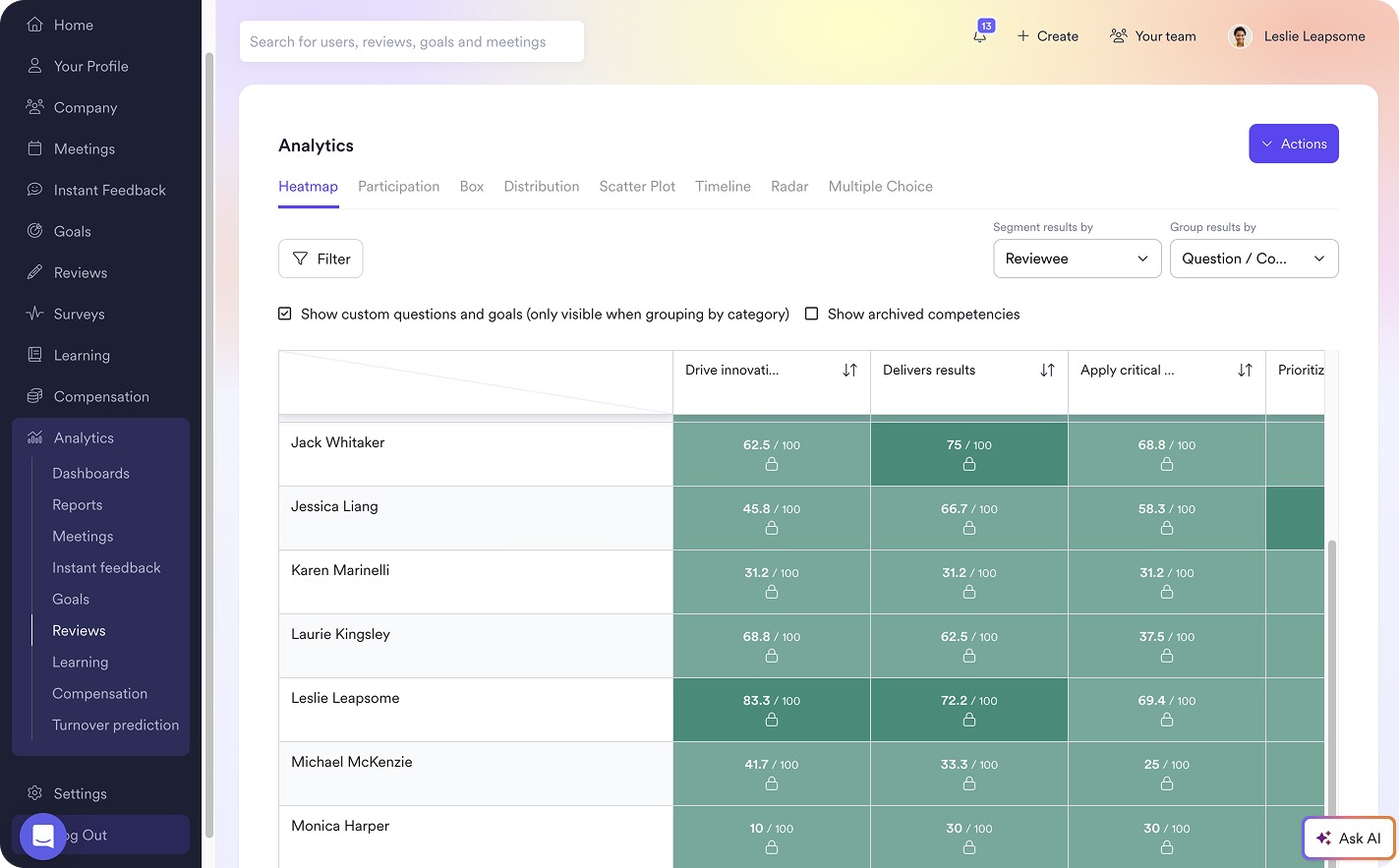
💪 Build stronger performance across your entire workforce
Leapsome’s customizable, repeatable Performance Reviews give every employee the clarity and context they need to grow, regardless of their contract lengths.
👉 Explore Performance Reviews
4. Make renewal a workforce decision, not a calendar alert
Regular communication and early notice periods give the employee time to plan, and help the team protect workload continuity when the role changes or ends. So before the start date, set an internal deadline for deciding whether to extend the contract, convert the role, or let it end. And make sure that decision happens early enough for HR to update the agreement or prepare the offboarding process properly.
A contract end-date reminder can prevent an admin mistake, but it can’t tell HR whether the role should continue. The decision depends on current workforce demand and reliable performance information.
To get a clear view of that data, you’ll need a system that tracks employees from onboarding onward. When workflows for managing contract details and performance data live together in Leapsome’s HRIS, HR can assess each role in context and plan next steps, before the end date forces that decision.
“Workflows give you limitless opportunities to set up steps that need to be taken by various stakeholders — everything from onboarding and offboarding to contract changes can happen automatically.”
– Suraj Paneru, Customer Success Coach at Leapsome
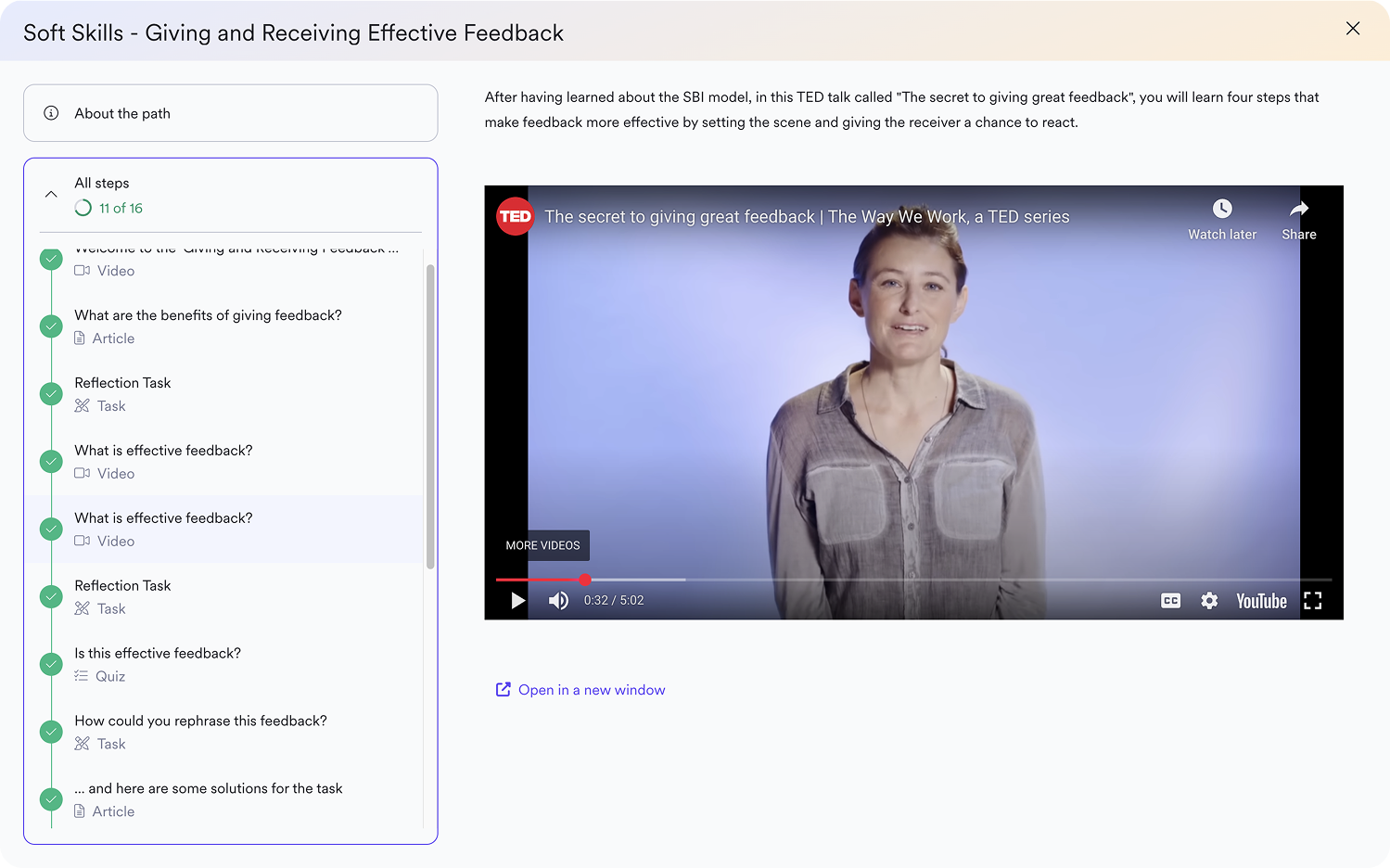
🔭 View the full employee journey
Leapsome connects the entire employee lifecycle, from onboarding to performance, in one system, so HR can make workforce decisions with a complete picture.
👉 Learn about Pre-Boarding and Onboarding
Support every stage of the employee lifecycle with Leapsome
For many fixed-term contracts, the dates are clearly defined while the rest of the employee experience stays scattered. Performance notes live with managers, and development activity sits in a siloed tool. That fragmented setup encourages a short-term mindset, leaving temporary employees on the margins of the organization.
When those hires instead receive the same clarity, feedback, and development support as the wider workforce, they can make meaningful contributions to your organization’s growth. Leapsome streamlines these tasks by bringing the full employee lifecycle into one connected HRIS and people management platform.
With Leapsome, your company can:
- Create a consistent start: Deliver structured onboarding and role-specific learning from day one.
- Keep performance visible: Connect goals and reviews, so managers can track contributions throughout each contract.
- Support employee engagement: Include fixed-term employees in feedback and engagement processes.
- Make stronger workforce decisions: Bring employee records and people insights together, and gain clearer context for extensions and future hiring.
“Leapsome is our go-to place for looking at our work from a goal perspective — how we’re progressing and hitting those goals. It has proven to be really successful in uniting us, while working remotely and across different offices, and keeping us focused on the right things. Leapsome is a core part of how we do our business.” – Lisa Potter, VP of Marketing at KCare
🤝 Build a workforce where everyone can contribute
Leapsome connects the entire employee lifecycle, giving fixed-term team members the clarity and support they need to contribute fully.
👉 Request a demo