Workforce Analytics: So arbeiten HR-Daten für eure Business-Strategie

.jpg)
Workforce Analytics ist der Prozess, Workforce-Daten zu sammeln und zu analysieren, um bessere Business- und People-Entscheidungen zu treffen. Die meisten Unternehmen erfassen diese Daten bereits, verknüpfen sie aber nicht sinnvoll mit ihren Entscheidungen. Tatsächlich glaubt weniger als die Hälfte der HR-Führungskräfte, dass ihre Analytics-Systeme das Talent-Management und Business-Entscheidungen wirklich verbessern.* Um diese Lücke zu schließen, reicht ein Blick auf schicke Dashboards und Reports nicht aus.
Dieser Guide zeigt, wie Workforce Analytics als Entscheidungsmotor funktioniert und euch hilft, klügere Workforce-Entscheidungen für mehr langfristigen Erfolg zu treffen. Ihr erfahrt, wie sich Workforce Analytics vom klassischen HR-Reporting unterscheidet, wie ihr proaktive Workforce-Entscheidungen trefft und auf welche Kennzahlen es wirklich ankommt.
* HR.com, 2025
Was ist Workforce Analytics?
Workforce Analytics ist der Prozess, bei dem Personaldaten mit statistischen Methoden kombiniert werden, um strategische Workforce-Entscheidungen, einschließlich Vorschlägen für People-Initiativen, mit harten Zahlen zu untermauern. Die Disziplin kombiniert:
- Mitarbeiterdaten, wie Headcount und Vergütung, für den organisatorischen Kontext.
- HR-Kennzahlen, wie Ergebnisse aus Engagement-Umfragen und Mitarbeiterfluktuation, um die Wirksamkeit von People-Programmen zu messen.
- Workforce-Trendprognosen, um Probleme wie sinkendes Engagement früh zu erkennen.
- Prädiktive Analysen zur Unterstützung von Aufgaben wie Workforce-Planung und der Identifikation von Top-Performern.
Während klassisches HR-Reporting Daten nur darstellt, setzt Workforce Analytics diese Daten aktiv ein, um Business- und People-Entscheidungen zu informieren.
Arten von Workforce Analytics
Es gibt mehrere Wege, die Daten zu interpretieren, die HR-Teams sammeln:
- Deskriptive Analytics betrachtet historische Daten, um zu verstehen, was in der Vergangenheit passiert ist und wie diese Vergangenheit die Gegenwart prägt.
- Diagnostische Analytics geht dem „Warum“ auf den Grund und untersucht, was Workforce-Muster überhaupt erst ausgelöst hat (zum Beispiel, dass niedrige Werte beim Mitarbeiterengagement mit ineffizientem Management zusammenhängen).
- Prädiktive Analytics prognostiziert zukünftige Entwicklungen und macht auf Risiken wie zunehmendes Burnout und wachsende Kompetenzlücken aufmerksam.
Oft nutzt diagnostische Analytics Erkenntnisse aus der deskriptiven Analytics, und prädiktive Analytics schöpft aus beidem, damit HR-Teams ihre People-Strategien fundiert begründen und ihre Logik klar an die Führungsebene kommunizieren können.
Vorteile von Workforce Analytics
Workforce Analytics kann die Gesamtstrategie eines Unternehmens aus mehreren Perspektiven unterstützen:
- Smartere Rekrutierung: Ein gut aufgesetztes Workforce-Analytics-Programm deckt Kompetenzlücken im bestehenden Mitarbeiterpool auf und identifiziert die Eigenschaften, die Mitarbeitende erfolgreicher machen.
- Bessere Entscheidungen im Workforce-Management: Workforce-Management-Analytics gibt HR-Teams Einblick in unter- oder überbesetzte Teams sowie in Teams, die mit Engagement kämpfen oder Ziele wiederholt verfehlen, sodass HR mit datenbasierten Maßnahmen eingreifen kann.
- Fundierteres Management von Workforce-Trends: HR-Teams sehen das große Ganze bei zentralen Kennzahlen wie Bindung und Mitarbeiterengagement und erkennen neue, wachsende Probleme lange bevor sie zum Notfall werden.
Strategie statt Scorecards: HR-Reporting vs. Workforce Analytics
Laut einem Gartner-Report von 2024 stufen CEOs die Belegschaft als ihre drittwichtigste Priorität ein, nur übertroffen von Wachstum und Technologie. HR-Reporting hat seinen Platz, wenn es darum geht, Stakeholder über Mitarbeiterleistung und Wohlbefinden auf dem Laufenden zu halten, doch es untermauert diese Erkenntnisse nicht so wie Workforce Analytics. So unterscheiden sich die beiden Disziplinen.
HR-Reporting
Unternehmen nutzen HR-Reporting, um Fragen zu beantworten, was in der Vergangenheit passiert ist, ähnlich wie deskriptive Analytics. Reporting konzentriert sich darauf, Aktivitäten über die Zeit hinweg zu verfolgen, indem historische Kennzahlen betrachtet und diese Zahlen geteilt werden, statt die Daten zu nutzen, um für People-Strategien zu argumentieren und HR-Prozesse zu optimieren.
Workforce Analytics
Workforce Analytics hört nicht bei der Datenerfassung auf. Ihr könnt die durch diesen Prozess gewonnenen Informationen vergleichen, gegenüberstellen und analysieren, um Muster früh genug zu erkennen, damit HR-Teams verstärken können, was funktioniert, und beheben, was nicht funktioniert. Indem Bauchgefühl durch evidenzbasierte Erkenntnisse ersetzt wird, können Unternehmen mit klarer Richtung auf Geschäftsziele und People-Initiativen hinarbeiten.
Strategische Workforce Intelligence
In seiner fortschrittlichsten Form ist Workforce Analytics wie strategische Workforce Intelligence. Sobald euer Analytics-Programm tief in die übergeordneten HR-Systeme eingebettet ist, könnt ihr euch auf die Erkenntnisse stützen, um die Führungsebene in die richtige Richtung zu lenken und effektivere Entscheidungen zur Workforce-Planung zu treffen.
Trefft ihr eure Workforce-Entscheidungen reaktiv oder prädiktiv?
„Die Sprache der Führungsebene zu sprechen, also in Kennzahlen und ROI, die überzeugen, gewinnt Business Cases für HR-Teams.“
Katerina Arsova, Head of People and Talent Operations and Partnerships bei Leapsome
Viele Unternehmen kommen über die reine Erfassung von Personaldaten nicht hinaus und lassen Workforce Analytics (und die Autorität, die es euren People-Initiativen verleiht) komplett außen vor. Hier sind drei Warnsignale, dass euer Unternehmen dazugehört:
- Verstreute Workforce-Daten und -Systeme: Wenn es keine einzige verlässliche Quelle gibt, die eure HR-Systeme und Daten miteinander verbindet, verbringt euer Team mehr Zeit damit, Details zusammenzusuchen, als Trends zu analysieren, und niemand hat das vollständige Bild.
- Die Führungsebene hängt in der Vergangenheit fest: Führungskräfte mit nur begrenztem Einblick in die Vergangenheit des Unternehmens treffen reaktive Entscheidungen und versuchen ständig, die Gegenwart einzuholen.
- Fluktuationsprobleme werden zu spät sichtbar: Wenn HR Frühindikatoren für Kündigungsrisiken (wie sinkendes Engagement oder steigende Fehlzeiten) nicht rechtzeitig erkennt, kann steigende Fluktuation zu einem echten Personalengpass werden.
„Hat eine Führungskraft ein Bauchgefühl bei Anstiegen der Fehlzeiten, kann sie es in Sekunden überprüfen und handeln. Echtzeit schlägt monatealte Exporte jedes Mal.“
Florian Klages, Managing Partner bei torq.partners
Wenn diese Warnsignale auf euer Unternehmen zutreffen, kann ein HRIS- und People-Management-System helfen. Leapsome zentralisiert alle eure Mitarbeiterdaten und bietet Tools, um sie zu analysieren und operativ nutzbar zu machen. Wenn diese Informationen an einem Ort liegen, könnt ihr Risiken schneller erkennen und fundiertere Entscheidungen treffen, die negative Trends in positive Schritte verwandeln.
So implementiert ihr ein wirksames Workforce-Analytics-Programm
Ein erfolgreiches Workforce-Analytics-Programm braucht eine klare Richtung; ihr müsst eure Workforce-Ziele und zentralen Kennzahlen festlegen. Wenn ihr zum Beispiel die Fluktuation senken wollt, solltet ihr eure Bindungsrate und Fluktuationsindikatoren im Blick behalten.
Der nächste Schritt ist, eure Daten zu organisieren. Hochwertige Daten sind das Fundament des gesamten Vorhabens, und manuell gepflegte Excel-Tabellen reichen dafür nicht aus. Stellt sicher, dass eure Workforce-Analytics-Lösung jede Art von Daten unterstützt, die ihr braucht (und überlegt, was ihr künftig brauchen könntet), und dass alles am selben zentralen Ort gespeichert wird, für einfacheren Zugriff und Vergleich.
Sobald Ziele festgelegt und Daten aufbereitet sind, ist es Zeit, Zahlen in Handlungen umzusetzen. Besprecht eure Zahlen regelmäßig mit anderen Mitgliedern der Führungsebene, um zu sehen, wie sich eure Werte über die Zeit verändern. Langfristige Daten zeigen euch, wie gut sich eure prädiktiven Analysen in der Praxis bewährt haben, und helfen, eure Strategie entsprechend anzupassen.
Dieser Schritt ist nicht immer einfach, aber die richtige Plattform kann helfen. Laut Deloittes 2026 HR Tech Predictions Survey wollen 78 % der Unternehmen prädiktive Analytics einsetzen, aber nur 34 % verfügen über HR-Systeme, die dafür ausreichend integriert sind. Eine Plattform zu finden, die alle eure Personaldaten zentralisiert, kann daher über Erfolg oder Misserfolg eurer gesamten Workforce-Analytics-Strategie entscheiden.
🤼 Schluss mit dem Kampf gegen kaputte Analytics-Lösungen
Leapsome hilft HR-Teams, die Erkenntnisse zu gewinnen, die sie für effektive, datengestützte Entscheidungen brauchen, mit prädiktiver Workforce Analytics.
👉 Entdeckt Analytics
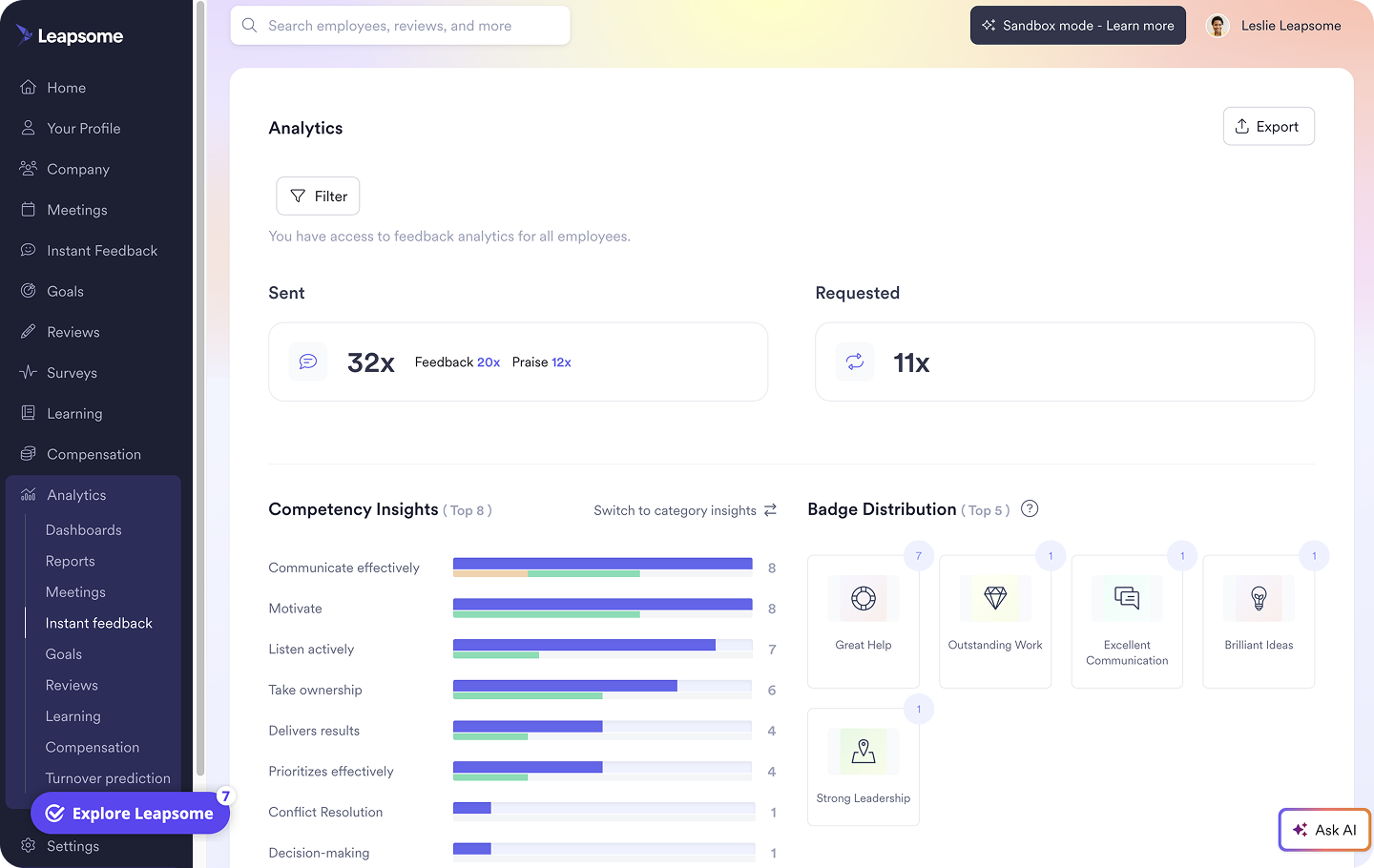
„Dashboards sind individuelle Reports, die ihr auf Basis dessen erstellen könnt, was am wichtigsten ist: Headcount, Wachstum, Diversität, Gehalt, alles, visualisiert und bereit zum Teilen.“
Sophie O’Donoghue, Customer Success Coach bei Leapsome
Was sind Beispiele für Workforce Analytics? Zentrale Kennzahlen im Überblick
Ihr müsst nicht jede mögliche Kennzahl verfolgen, um Ergebnisse aus einem Workforce-Analytics-Programm zu ziehen. Hier sind einige der am weitesten verbreiteten (und nützlichsten) Kennzahlen, die ihr im Blick behalten solltet.
Fluktuations- und Bindungskennzahlen
Fluktuations- und Bindungsraten sind starke Indikatoren für die Gesundheit der Belegschaft, da sie zeigen, wie gut euer Unternehmen seine Mitarbeitenden hält. Als nachlaufende Indikatoren können sie allerdings nur zeigen, was passiert ist, nicht was als Nächstes kommt.
Frühindikatoren für Kündigungsrisiken sind dagegen prädiktiv; ihr könnt sie nutzen, um genau die Signale zu erkennen, die dazu führen, dass Mitarbeitende kündigen, wie sinkendes Engagement oder steigende Fehlzeiten.
Wenn ihr diese Kennzahlen in euer Workforce-Analytics-Programm aufnehmt, erhaltet ihr die Erkenntnisse, die eure Bindungsstrategien leiten und die Employee Experience zum Vorteil aller gestalten.
Leistungs- und Produktivitätskennzahlen
Leistungs- und Produktivitätskennzahlen helfen euch zu erkennen, wann und wo gezielte Maßnahmen nötig sind. Leistungstrends zeichnen ein breites Bild davon, wie es dem Unternehmen geht, indem sie Muster sichtbar machen, die sich über einzelne Review-Zyklen hinweg zeigen. Zielerreichungsraten verbinden individuellen Output mit Geschäftszielen und helfen HR zu erkennen, nicht nur, wie Mitarbeitende in ihren Rollen beitragen, sondern wie gut sich diese Beiträge in besseren ROI und höheren Umsatz übersetzen.
Ergänzt eure Leistungsanalyse um Produktivitätsindikatoren wie Output pro Mitarbeitendem und Bearbeitungszeit, gewinnt ihr eine Linse, um bei Bedarf tiefer in bestimmte Teams oder Funktionen einzutauchen.
Kennzahlen zu Mitarbeiterengagement und Gesundheit der Belegschaft
„Engagement-Werte und Vertrauenskennzahlen sind Signale, keine Ziele. Wenn eine Kennzahl die Geschäftsergebnisse nicht beeinflusst, lasst sie fallen und konzentriert euch auf das, was wirkt.“
Melanie Naranjo, Chief People Officer bei Ethena
Werte zum Mitarbeiterengagement sind ein Frühindikator, das heißt, sie verschieben sich in der Regel, bevor Leistung einbricht und Fluktuation sichtbar wird. Fehlzeitenquoten mit einzubeziehen hilft euch, Disengagement und Burnout früh zu erkennen. Und die Entwicklung der Mitarbeiterzufriedenheit im Blick zu behalten, zeigt euch, ob es ein individuelles Problem oder die Unternehmenskultur ist, der es an etwas fehlt.
Zusammen bilden diese Kennzahlen ein Frühwarnsystem, das HR-Teams hilft, einzugreifen, bevor aus aufkommenden Problemen ernste Probleme werden.
📊 Sammelt Workforce-Daten, ohne ins Schwitzen zu kommen
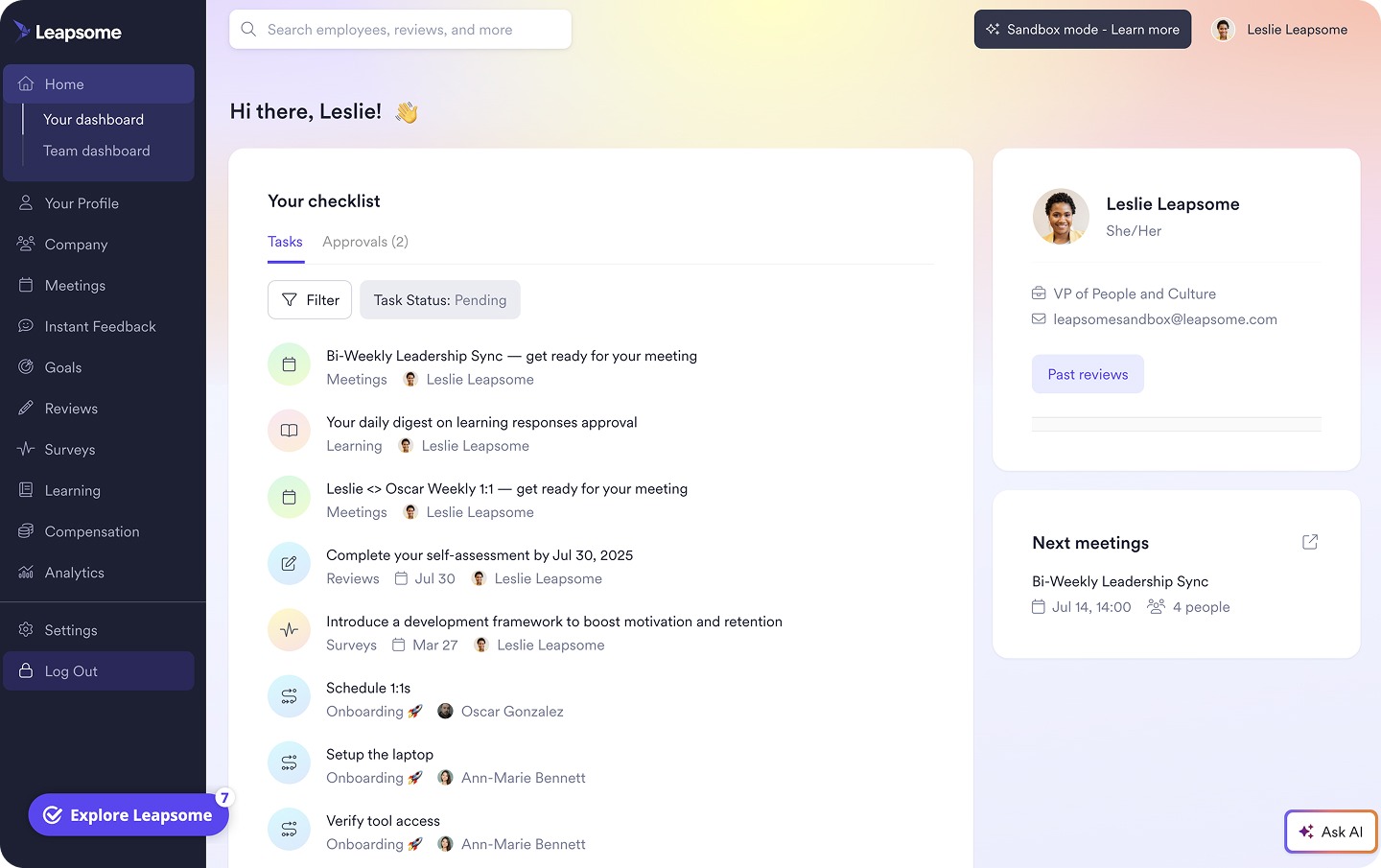
Erfasst und speichert Mitarbeiterinformationen mit Leapsome, analysiert dann Engagement-Erkenntnisse und Leistungskennzahlen auf derselben Plattform, um ins Detail zu gehen für eure Mitarbeitenden.
👉 Entdeckt Mitarbeiterprofile
Trefft bessere Workforce-Entscheidungen mit Leapsome
Fragmentierte Daten, getrennte Reporting-Systeme und begrenzte Einblicke in Workforce-Risiken stehen proaktiven People-Entscheidungen im Weg und zwingen HR-Teams dazu, spontan auf Probleme zu reagieren, statt vorausschauend zu planen.
Leapsome gibt eurem HR-Team einen strukturierten Weg, rohe Daten in Erkenntnisse zu verwandeln, denen ihr vertrauen könnt. So erhaltet ihr Zugriff auf:
- Zentralisierte Mitarbeiterdaten, die Silos aufbrechen
- AI-gestützte Analytics, die Muster aufdeckt
- Frühzeitige Erkennung von Engagement- und Bindungsrisiken für gezieltere Maßnahmen, bevor Mitarbeitende kündigen
- Strategischere Management- und Führungsentscheidungen auf Basis echter Daten
- Bessere Analytics und Transparenz für die Workforce-Planung mit anpassbaren Dashboards und automatisiertem Reporting
„Ihr werdet die Zusammenarbeit mit Leapsome nicht bereuen. Ihr bekommt hervorragende Qualität und viel für den Preis. Selbst wenn Leapsome nur für Meetings genutzt würde, hätten Unternehmen schon einen Mehrwert. Aber wenn ihr eure OKR-Journey starten wollt, ist Leapsome eine klare Sache. Dieses intuitive Engagement lässt sich in keiner Tabelle nachbilden.“ Jimmy Ianuzzi, Vice President and General Manager bei nTech Workforce
🛠️ Effektive Workforce Analytics beginnt mit den richtigen Tools
Leapsomes Tools, von vernetzten Daten bis zu AI-gestützter Analytics, helfen HR-Teams, komplexe Workforce-Daten in produktive Workforce-Entscheidungen zu verwandeln.
👉 Demo anfragen
FAQ
Was ist eine Workforce-Analytics-Plattform?
Eine Workforce-Analytics-Plattform ist eine Software, die Mitarbeiterdaten zentralisiert und mit einer umfassenden Toolsuite verbindet, um sie zu analysieren und in Handlungen umzusetzen. Sie muss kein eigenständiges Tool sein. Leapsome ist zum Beispiel ein HRIS- und People-Management-Tool mit zahlreichen Workforce-Analytics-Funktionen.
Welche ist die beste verfügbare Workforce-Analytics-Software?
Die beste Workforce-Analytics-Software hängt von der Größe, den Zielen und dem bestehenden Tech-Stack eures Unternehmens ab. Sucht nach einer Lösung, die den Umfang eures Unternehmens abdeckt und die Kennzahlen misst, die ihr jetzt braucht, sowie das, was euer Wachstumsplan für die Zukunft vorsieht.




.png)

.jpg)