Die besten ADP-Alternativen für Payroll und HCM 2026

%20(1).webp)
ADP ist eine etablierte Plattform für Lohnabrechnung und HR, aber viele Organisationen finden die Konfiguration knifflig. Kleinere Unternehmen kämpfen oft mit der Komplexität, während mittelständische Teams mit fragmentierten Tools, begrenzter Flexibilität und steigenden Kosten konfrontiert sind, die es erschweren, die HR-Infrastruktur zu modernisieren und zentrale People-Prozesse zu verbinden.
Dieser Artikel vergleicht die besten ADP-Alternativen für Lohnabrechnung und HRIS im Jahr 2026. Ihr findet eine Vergleichstabelle, Analysen der führenden Plattformen und praktische Hinweise dazu, wie ihr die richtige Plattform für die Komplexität und Wachstumsphase eurer Organisation auswählt.
Ob ihr nach Payroll-first-Einfachheit sucht oder nach einem vereinten HRIS, das die Lohnabrechnung mit Performance, Engagement und Lernen verbindet: Dieser Leitfaden hilft euch zu bewerten, welche ADP-Wettbewerber zu euren tatsächlichen Anforderungen passen.
🔗 Vereint eure Lohnabrechnungsvorbereitung mit Performance und Engagement
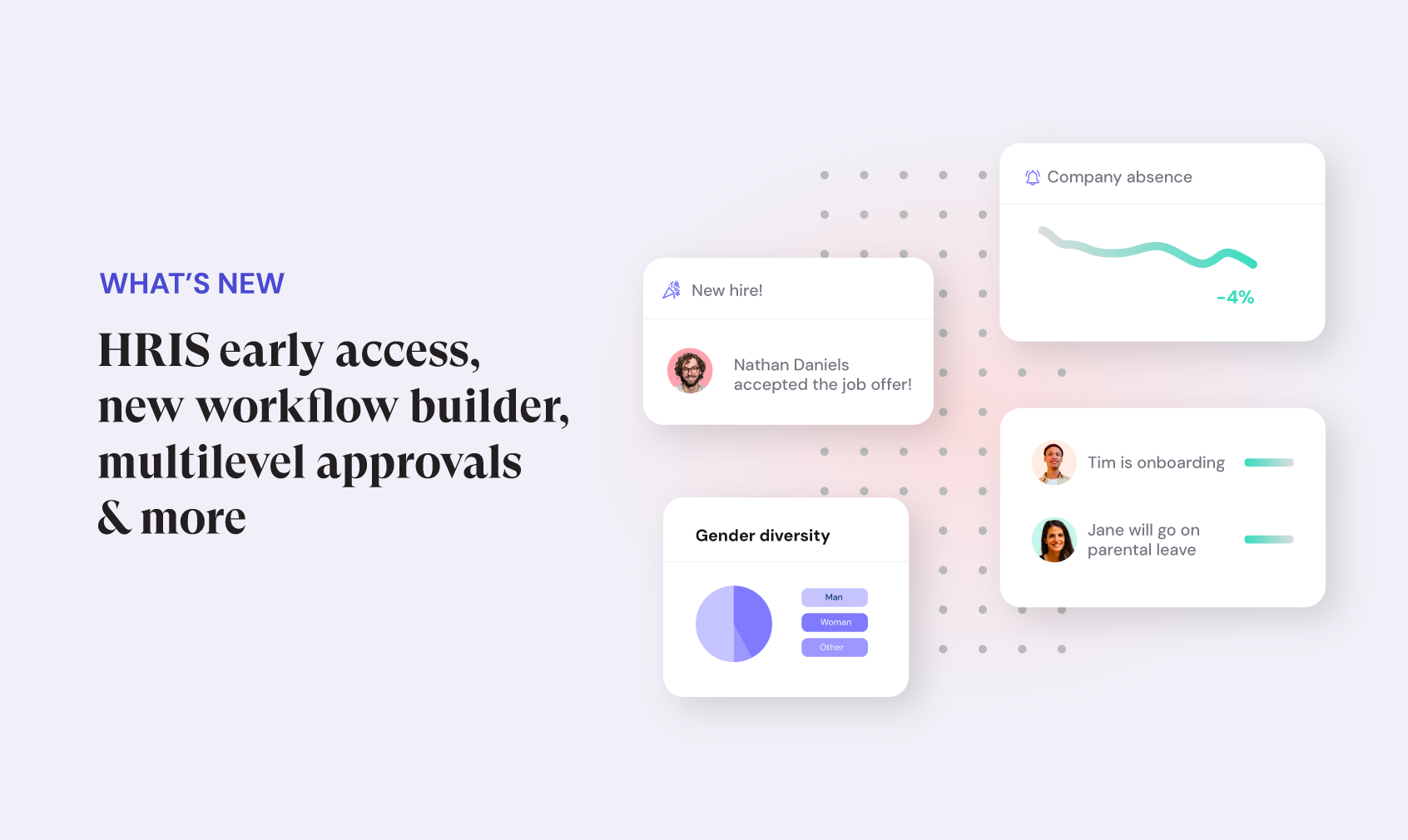
Leapsome verbindet zentrale HR-Daten mit People Enablement in einer hochgradig konfigurierbaren Plattform.
👉 Leapsome HRIS entdecken
ADP-Alternativen für 2026: ein schneller Vergleich
Diese Tabelle bietet einen direkten Vergleich unserer ausgewählten ADP-Alternativen. Nutzt sie, um zu verstehen, worin jede Plattform glänzt und für wen sie geeignet ist.
Haftungsausschluss: Die Informationen sind korrekt zum Stand Februar 2026 und basieren auf öffentlich verfügbarer Anbieterdokumentation und Produktseiten. SaaS-Produkte entwickeln sich schnell weiter, bestätigt Details daher immer direkt auf der Website des Anbieters.
{{TABLE}}
Leapsome
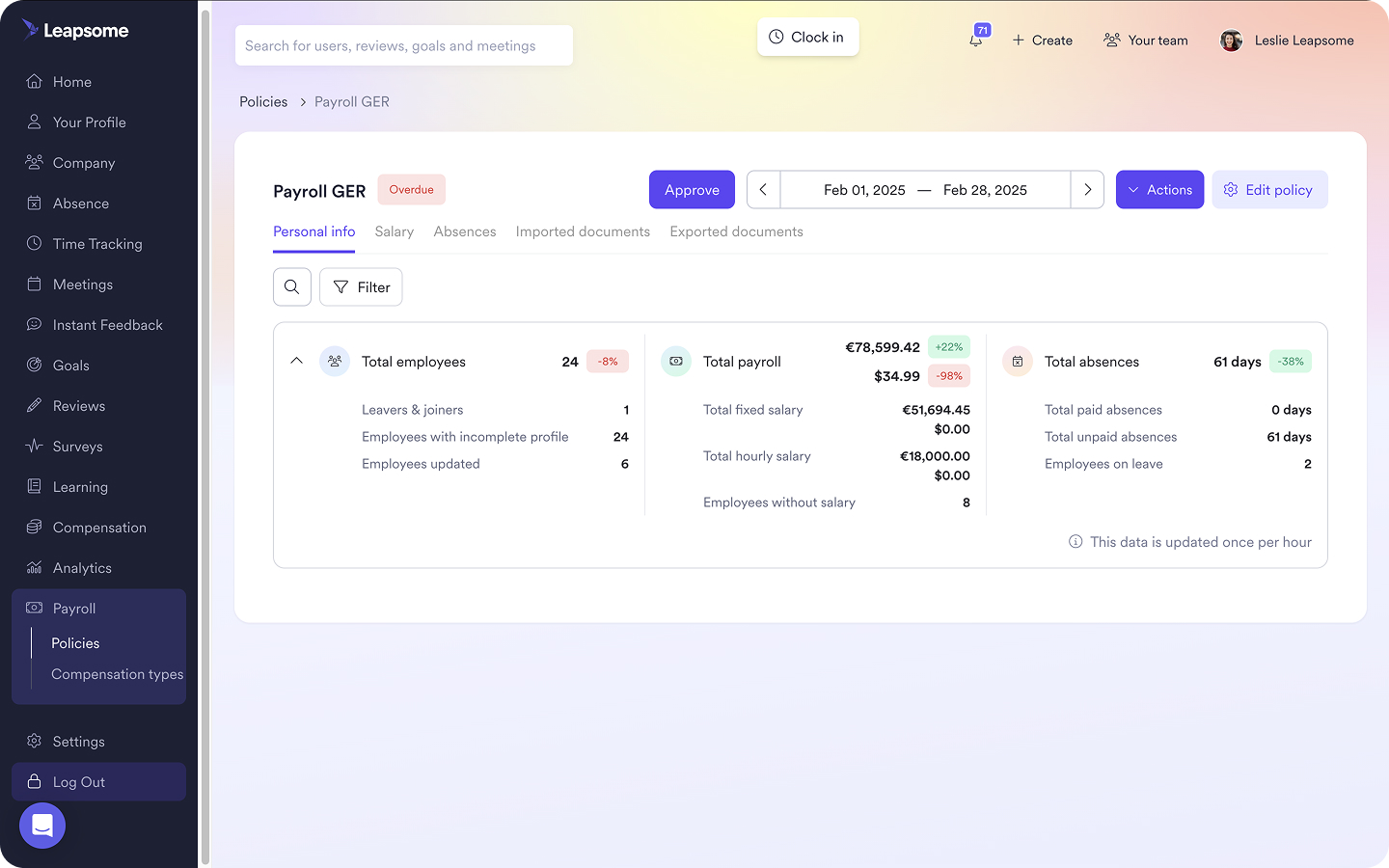
Leapsome ist ein modernes, people-first HRIS, das fragmentierte HR- und Payroll-Workflows durch ein einziges, wirklich vereintes System ersetzt. Die Plattform verbindet Mitarbeitendendaten über Lohnabrechnungsabläufe, Performance Management und People Enablement hinweg. Anders als Payroll-first-Tools verfolgt Leapsome einen HRIS-Ansatz mit AI-gestützten Insights und konfigurierbaren Prozessen, die sich daran anpassen, wie eure Organisation tatsächlich arbeitet.
(5⭐) „Wir fanden Leapsome einfach Schritt für Schritt einzuführen und waren erleichtert, wie angenehm es zu nutzen war: Die Menschen fühlten sich endlich mit ihren HR-Prozessen verbunden. Es hat die Zeit, die unser HR-Team für diese Prozesse aufwendet, halbiert, und weil es mehr laufende Kommunikation zwischen den Teams gibt, haben wir alle ein besseres Verständnis unserer Rollen und fühlen uns stärker eingebunden.“
– Nina R., Leapsome-Nutzerin
Wichtige Funktionen
- Vereinte Mitarbeitendendaten über die Module Payroll, Performance, Engagement und Lernen hinweg
- Konfigurierbare Workflows und Payroll-Automatisierung, die sich an die Unternehmensprozesse anpassen
- AI-gestützte Insights, die Anomalien aufdecken und HR-Teams nächste Schritte empfehlen
- Integrierte Performance Reviews und Vergütungsplanung, die direkt mit den Payroll-Daten verknüpft sind
- Echtzeit-Payroll-Reports und Analytics, die mit umfassenderen Personalkennzahlen verbunden sind
- Anpassbares Onboarding, Time Tracking und Abwesenheitsmanagement, an die Lohnabrechnung gekoppelt
- Fortgeschrittenes Tracking von Payroll-Kennzahlen über den gesamten Mitarbeitendenlebenszyklus
Vorteile
- Konsolidiert mehrere HR-Tools in einer Plattform und reduziert so Tool-Wildwuchs und Datensilos
- Verbindet die Lohnabrechnung direkt mit Performance-, Engagement- und Entwicklungsinitiativen
- Hochgradig konfigurierbar, um zu einzigartigen Workflows zu passen, ohne umfangreiche Anpassungen zu erfordern
- AI-Funktionen helfen HR-Teams, Probleme und Chancen proaktiv zu erkennen
- Starke, auf Mitarbeitende ausgerichtete Oberfläche fördert eine hohe Adoption in der gesamten Organisation
- DSGVO-konform und ISO-27001-zertifiziert mit globaler Skalierbarkeit
- Moderne UI, die für alle in der Organisation gestaltet ist, nicht nur für HR-Admins
Einschränkungen
- Beinhaltet keine native Lohnabrechnungsverarbeitung
- Erfordert Investitionen in Implementierung und Change-Management, um den vollen Mehrwert zu erzielen
Am besten geeignet für
Teams jeder Größe, die Payroll-Workflows mit Performance, Engagement und Lernen vereinen möchten, alles innerhalb eines einzigen Systems.
💡 Seht, wie Leapsome fragmentierte HR-Tools ersetzt
Entdeckt, wie vereinte Mitarbeitendendaten bessere Entscheidungen über Payroll, Performance und Entwicklung hinweg ermöglichen.
👉 Demo buchen
Gusto
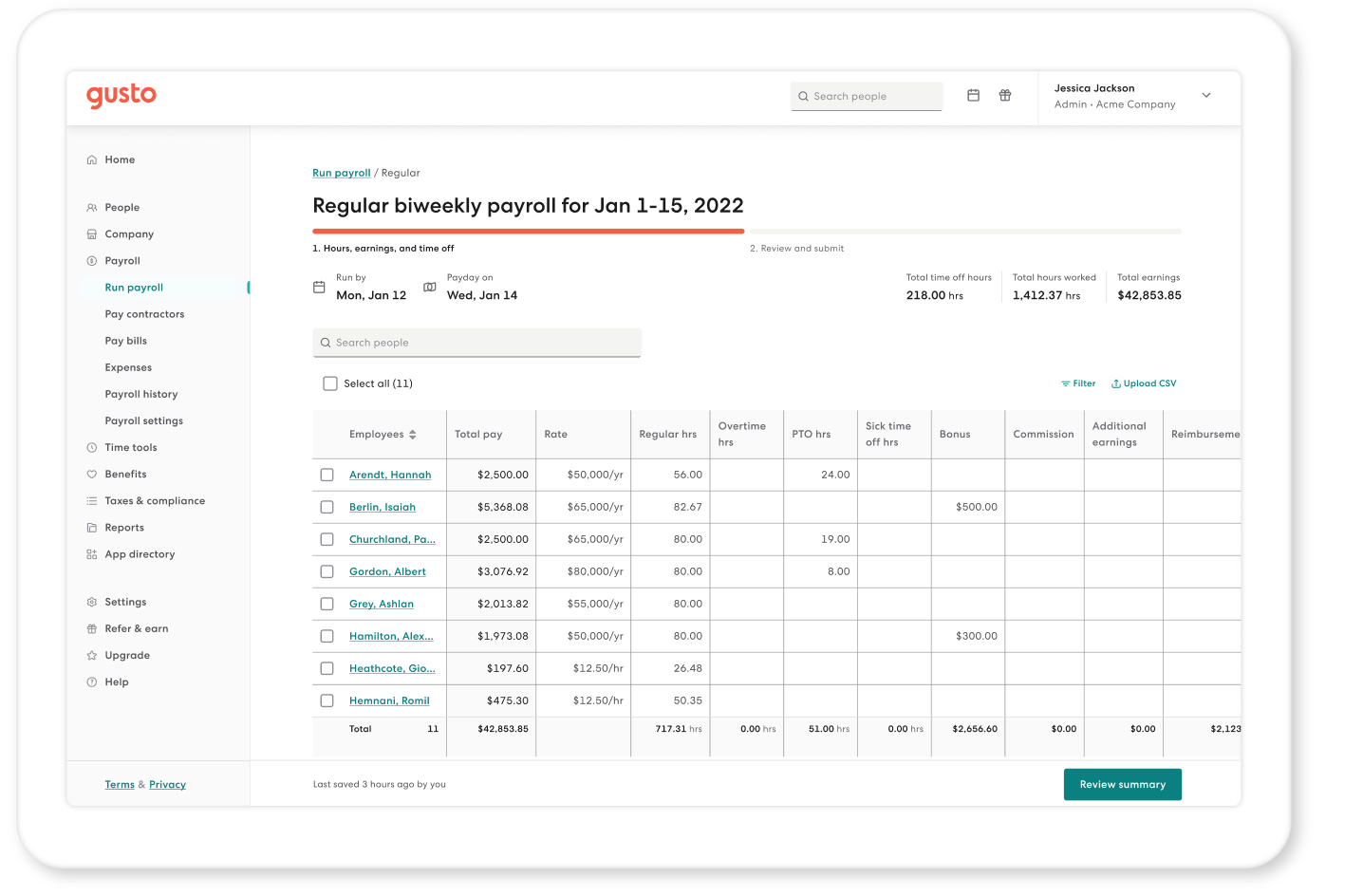
Gusto ist eine Plattform, die häufig von kleinen Unternehmen genutzt wird, die unkomplizierte Payroll-Funktionen und HR-Funktionalität suchen. Die Plattform konzentriert sich darauf, die Lohnabrechnung für Teams ohne dediziertes HR-Personal einfach und zugänglich zu machen. Gusto bewältigt Steuermeldung, Benefits-Verwaltung und Compliance und behält dabei eine zugängliche Oberfläche, die Nicht-Spezialisten leicht navigieren können.
Wichtige Funktionen
- Full-Service-Lohnabrechnung mit automatisierter Steuermeldung
- Verwaltung von Mitarbeiter-Benefits, einschließlich Krankenversicherung und 401(k)
- Time Tracking und PTO-Verwaltung
- Onboarding für neue Mitarbeitende und Vorlagen für Angebotsschreiben
- Self-Service-Portal für Mitarbeitende für Gehaltsabrechnungen und Steuerdokumente
- Compliance-Unterstützung für bundesstaatliche und einzelstaatliche Lohnabrechnungsvorschriften
- Integration mit Buchhaltungssoftware wie QuickBooks und Xero
Vorteile
- Einfache, intuitive Oberfläche, die für Nicht-HR-Spezialisten gestaltet ist
- Transparente Preise ohne versteckte Gebühren für die zentralen Payroll-Funktionen
- Starker Kundensupport mit dedizierter Account-Unterstützung
- Schneller Einrichtungsprozess, der die Lohnabrechnung zügig zum Laufen bringt
- Zuverlässige Steuermeldung mit Genauigkeitsgarantien
- Gute Mobile App, damit Mitarbeitende auf Gehaltsinformationen zugreifen können
- Skaliert einigermaßen gut für Unternehmen mit unter 200 Mitarbeitenden
Einschränkungen
- Begrenzte Funktionen für Performance Management und Mitarbeitendenentwicklung
- Weniger konfigurierbar als vollwertige HRIS-Plattformen
- Kann teuer werden, wenn Unternehmen Module hinzufügen und ihre Belegschaft wächst
Am besten geeignet für
Kleine Unternehmen mit unkomplizierten Anforderungen an die Lohnabrechnung, die eine zuverlässige Verarbeitung ohne komplexe HR-Workflows wünschen.
Personio
.png)
Personio ist eine All-in-one-HR-Plattform mit integrierten Payroll-Fähigkeiten. Sie ist besonders bei europäischen Unternehmen beliebt. Die Plattform vereint zentrale HR-Funktionen wie Recruiting, Onboarding und Time Tracking mit einer Lohnabrechnungsverarbeitung, die auf europäische Compliance-Anforderungen ausgelegt ist. Personio positioniert sich als umfassende Lösung für wachsende Unternehmen, die ihre HR-Abläufe zentralisieren möchten.
Wichtige Funktionen
- Integrierte Lohnabrechnung mit Compliance für mehrere europäische Länder
- Applicant Tracking System (ATS) und Recruiting-Verwaltung
- Digitale Mitarbeitendenakten und Dokumentenverwaltung
- Time Tracking, Anwesenheit und Abwesenheitsmanagement
- Performance Management und Zielverfolgung
- Onboarding- und Offboarding-Workflows
- Reporting und Analytics über HR-Prozesse hinweg
Vorteile
- Starke europäische Payroll-Compliance und länderübergreifende Unterstützung
- Umfassende HR-Funktionalität über die reine Lohnabrechnung hinaus
- Zentralisierte Mitarbeitendendaten reduzieren den Verwaltungsaufwand
- Gute Integration mit europäischen Buchhaltungs- und Finanztools
- Skalierbar für Unternehmen von 50 bis zu mehreren hundert Mitarbeitenden
- Intuitive Oberfläche, die den Self-Service für Mitarbeitende fördert
- Regelmäßige Updates, um die Compliance mit sich ändernden Vorschriften aufrechtzuerhalten
Einschränkungen
- Primär für europäische Märkte konzipiert
- Einige Nutzer berichten, dass die Reaktionszeiten des Kundensupports variieren
- Die Anpassungsmöglichkeiten können im Vergleich zu Enterprise-Plattformen begrenzt sein
Am besten geeignet für
Europäische Unternehmen, die HR und Lohnabrechnung in einer Plattform konsolidieren möchten.
Rippling
.png)
Rippling ist eine vereinte Plattform, die HR-, Payroll- und IT-Management in einem einzigen System kombiniert. Das zentrale Wertversprechen der Plattform dreht sich um die Verwaltung von Mitarbeitendensystemen über Abteilungen hinweg, von der Bereitstellung von Laptops und Softwarezugriff bis zur Verarbeitung von Lohnabrechnung und Benefits. Rippling spricht Unternehmen an, die eine enge Integration zwischen ihren People-Abläufen, der IT und den Finanzen wünschen.
Wichtige Funktionen
- Globale Lohnabrechnungsverarbeitung über mehrere Länder hinweg
- IT-Geräteverwaltung und Software-Bereitstellung
- Benefits-Verwaltung und Versicherungsmanagement
- Zeit- und Anwesenheitserfassung mit automatisierten Genehmigungen
- Onboarding-Workflows, die Systemzugriff und Equipment-Einrichtung automatisieren
- App-Verwaltung mit automatisierter Bereitstellung und Entzug
- Individuelle Workflows und Automatisierungsregeln über HR- und IT-Prozesse hinweg
Vorteile
- Starke Automatisierungsfähigkeiten reduzieren manuelle Verwaltungsarbeit
- Vereinte Mitarbeitendendaten über HR-, Payroll- und IT-Systeme hinweg
- Schnelle Einrichtung für neue Mitarbeitende mit automatisiertem Systemzugriff
- Flexible Integrationen mit Hunderten von Drittanbieter-Tools
- Globale Payroll-Unterstützung für verteilte Teams
- Einzelnes Dashboard zur Verwaltung mehrerer Mitarbeitendensysteme
- Skaliert gut von kleinen Unternehmen bis zu mittelständischen Organisationen
Einschränkungen
- Kann sich für Unternehmen, die nur eine grundlegende Lohnabrechnung benötigen, komplex anfühlen
- Die Preisstruktur mit modularen Add-ons kann teuer werden
- Einige Funktionen erfordern zusätzliche Einrichtung und Konfiguration, um optimal zu funktionieren
Am besten geeignet für
Technologieaffine Unternehmen, die die Verwaltung von Mitarbeitendensystemen neben der Lohnabrechnung automatisieren möchten.
Workday
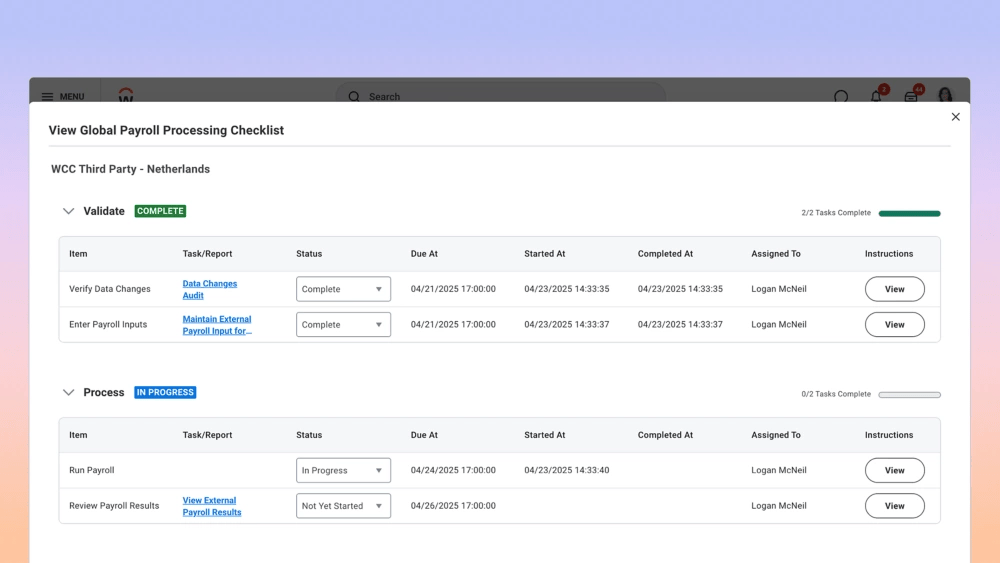
Workday ist eine Enterprise-HCM-Suite, die für große Organisationen mit komplexen, globalen Workforce-Anforderungen entwickelt wurde. Workday wurde für Unternehmen mit Tausenden von Mitarbeitenden konzipiert und bietet umfangreiche Module, die alles von Lohnabrechnung und Benefits bis zu Talent Management und Workforce Planning abdecken. Die Plattform ist bekannt für ihre Funktionstiefe und ihre Fähigkeit, komplizierte Organisationsstrukturen über mehrere Länder und Regionen hinweg zu bewältigen.
Wichtige Funktionen
- Globale Lohnabrechnung auf Enterprise-Niveau mit länderübergreifender Compliance
- Umfassendes Talent Management einschließlich Recruiting und Nachfolgeplanung
- Fortgeschrittene Workforce Planning und Analytics
- Integration des Finanzmanagements für Payroll-zu-Finanzen-Workflows
- Konfigurierbare Geschäftsprozesse und Genehmigungsketten
- Mobile App für den Self-Service von Mitarbeitenden und Genehmigungen durch Führungskräfte
- Umfangreiche Reporting-Fähigkeiten mit individuellen Dashboards
Vorteile
- Bewältigt komplexe Organisationsstrukturen und globale Betriebe effektiv
- Tiefe Funktionalität über den gesamten Mitarbeitendenlebenszyklus
- Starke Analytics- und Workforce-Planning-Tools für strategische Entscheidungen
- Regelmäßige Updates mit neuen Funktionen und Compliance-Änderungen
- Robuste Sicherheits- und Compliance-Zertifizierungen für Enterprise-Anforderungen
- Skaliert auf Zehntausende von Mitarbeitenden
- Etablierter Anbieter mit umfangreichem Netzwerk an Implementierungspartnern
Einschränkungen
- Erheblicher Zeit- und Kostenaufwand für die Implementierung
- Die Komplexität kann kleinere Organisationen oder solche mit einfacheren Anforderungen überfordern
- Die Preise sind typischerweise nur für große Unternehmen zugänglich
Am besten geeignet für
Große Unternehmen mit komplexen globalen Betrieben, die umfassende HCM-Funktionalität benötigen.
Paycom
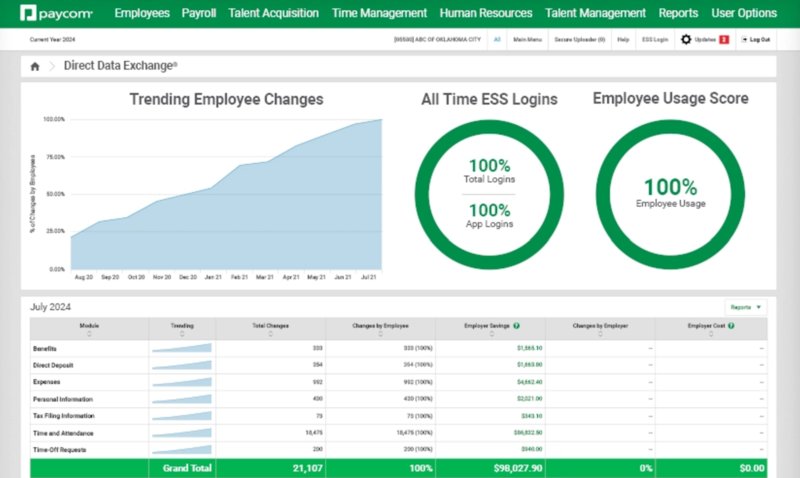
Paycom ist eine US-fokussierte Plattform für Lohnabrechnung und HR, die den Self-Service für Mitarbeitende in den Vordergrund stellt. Die Plattform ermöglicht es Mitarbeitenden, viele ihrer eigenen HR-Aufgaben zu erledigen, von der Zeiterfassung über die Verwaltung von Benefits bis zur Durchführung ihrer eigenen Lohnabrechnung, und reduziert so den Verwaltungsaufwand für HR-Teams. Paycom vermarktet sich als Single-Database-Lösung, die alle Mitarbeitendeninformationen an einem Ort hält.
Wichtige Funktionen
- Mitarbeitendengesteuerte Lohnabrechnung mit Self-Service-Verarbeitung
- Zeit- und Arbeitsmanagement mit Geofencing und mobilem Einstempeln
- Benefits-Verwaltung und -Anmeldung
- Talent Acquisition und Applicant Tracking
- Performance Management und Vergütungsplanung
- Learning-Management-System für Training und Entwicklung
- HR-Analytics und individuelles Reporting
Vorteile
- Starker Self-Service für Mitarbeitende reduziert die administrative HR-Arbeitslast
- Eine einzige Datenbank beseitigt Datendopplungen über Module hinweg
- Umfassende Funktionalität deckt die meisten HR-Anforderungen ab
- Mobile App ermöglicht es Mitarbeitenden, HR-Aufgaben unterwegs zu erledigen
- Dedizierte Implementierungs- und Support-Teams
- Gute Compliance-Unterstützung für US-Lohnabrechnungsvorschriften
- Skaliert von mittelständischen Unternehmen bis zu großen Organisationen
Einschränkungen
- Primär für US-Unternehmen konzipiert, mit begrenzter internationaler Funktionalität
- Die Benutzeroberfläche kann im Vergleich zu neueren Plattformen veraltet wirken
- Geotagging-Fähigkeiten können Mitarbeitende verschrecken
Am besten geeignet für
US-amerikanische Unternehmen, die administrative HR-Arbeit über Self-Service an die Mitarbeitenden verlagern möchten.
BambooHR
.png)
BambooHR ist eine HR-Plattform, die sich auf die Verwaltung von Mitarbeitendendaten, Hiring und People Operations konzentriert. Auch wenn BambooHR bestimmte Payroll-Fähigkeiten bietet, nutzen viele Unternehmen es als ihr zentrales HR-System und ergänzen es mit externen Payroll-Anbietern. Die Plattform spricht wachsende Unternehmen an, die Employee Experience und optimierte HR-Workflows über umfangreiche Konfigurierbarkeit stellen.
Wichtige Funktionen
- Zentralisierte Mitarbeitendendatenbank und digitale Personalakten
- ATS und Hiring-Workflows
- Automatisierung von Onboarding und Offboarding
- Verfolgung von Abwesenheiten und Genehmigungs-Workflows
- Performance Management mit Zielsetzung und Reviews
- Self-Service-Portal für Mitarbeitende zur Aktualisierung persönlicher Informationen
- Integration mit Drittanbieter-Payroll-Anbietern
Vorteile
- Übersichtliche, benutzerfreundliche Oberfläche, die Mitarbeitende leicht navigieren können
- Starker Fokus auf Employee Experience über die gesamte Plattform hinweg
- Schnelle Implementierung im Vergleich zu Enterprise-HRIS-Plattformen
- Gute Mobile App für Mitarbeitende und Führungskräfte gleichermaßen
- Flexible Integrationsoptionen mit verschiedenen Payroll- und Benefits-Anbietern
- Reporting-Tools, die gängige HR-Kennzahlen abdecken
- Skaliert gut für Unternehmen von 50 bis 500 Mitarbeitenden
Einschränkungen
- Begrenzte fortgeschrittene HR-Funktionalität im Vergleich zu vollwertigen HRIS-Plattformen
- Die Payroll-Funktionen sind weniger robust als dedizierte Payroll-Systeme
- Die Anpassungsmöglichkeiten sind stärker begrenzt als bei Enterprise-Lösungen
Am besten geeignet für
Organisationen, die Benutzerfreundlichkeit und schnelle Adoption priorisieren, besonders solche, denen es leichtfällt, separate Payroll-Tools zu integrieren
Justworks
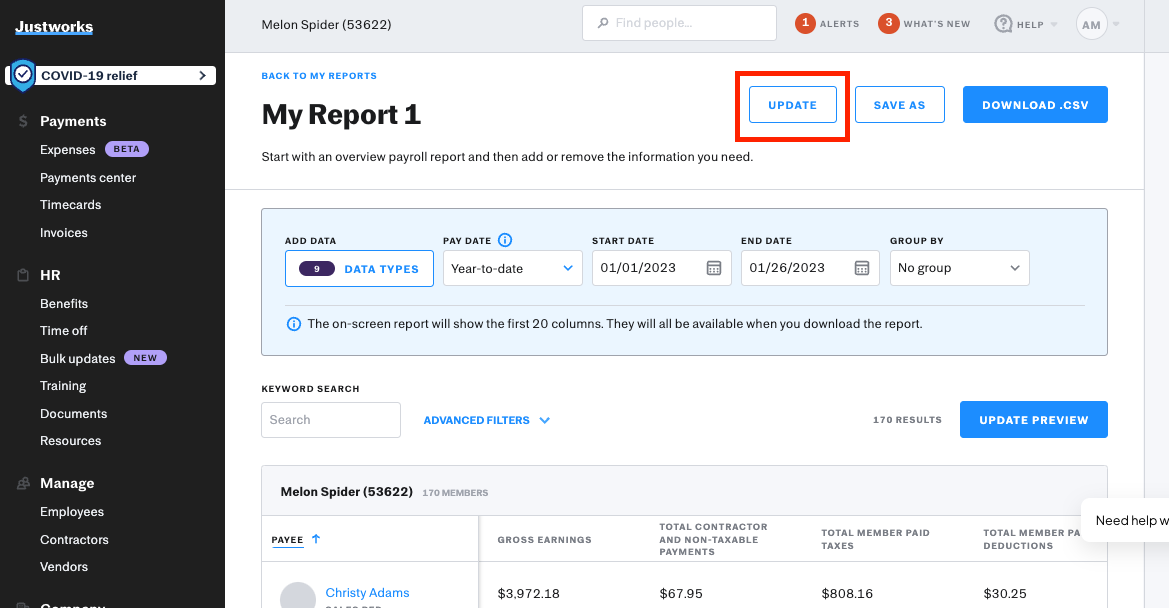
Justworks agiert als Professional Employer Organization (PEO) und nicht als klassische HRIS-Plattform. Mit anderen Worten: Justworks wird für Verwaltungszwecke zum Employer of Record und bewältigt Lohnabrechnung, Benefits, Compliance und HR-Support, während euer Unternehmen das tägliche Management der Mitarbeitenden beibehält. Dieses Modell spricht kleine und mittelständische Teams an, die komplexe Verwaltungsarbeit vollständig auslagern möchten.
Wichtige Funktionen
- PEO-Dienste mit Co-Employment-Vereinbarung
- Lohnabrechnungsverarbeitung mit Steuermeldung und Compliance
- Zugang zu Gruppentarifen für Krankenversicherung und Benefits
- Absicherung durch Arbeitsunfallversicherung und Schadenmanagement
- HR-Support und Compliance-Beratung
- Time Tracking und PTO-Verwaltung
- Onboarding von Mitarbeitenden und Dokumentenverwaltung
Vorteile
- Vereinfachte Benefits-Verwaltung mit Zugang zu besseren Versicherungstarifen
- Reduzierte Compliance-Last durch die PEO-Partnerschaft
- Planbare Preise pro Mitarbeitendem decken die meisten HR-Anforderungen ab
- Schnelle Einrichtung bringt Unternehmen zügig zum Laufen
- Dediziertes Support-Team bewältigt komplexe HR-Fragen
- Gute Option für Unternehmen ohne internes HR-Fachwissen
- Bewältigt die Komplexität von bundesstaatenübergreifender Lohnabrechnung effektiv
Einschränkungen
- Das PEO-Modell bedeutet weniger Kontrolle über bestimmte HR-Prozesse
- Teurer pro Mitarbeitendem als eigenständige Payroll-Software
- Der Wechsel weg von einer PEO erfordert einen Wechsel des Employer of Record
Am besten geeignet für
Kleine bis mittelständische Unternehmen, die ihre HR-Verwaltung vollständig auslagern möchten.
Deel
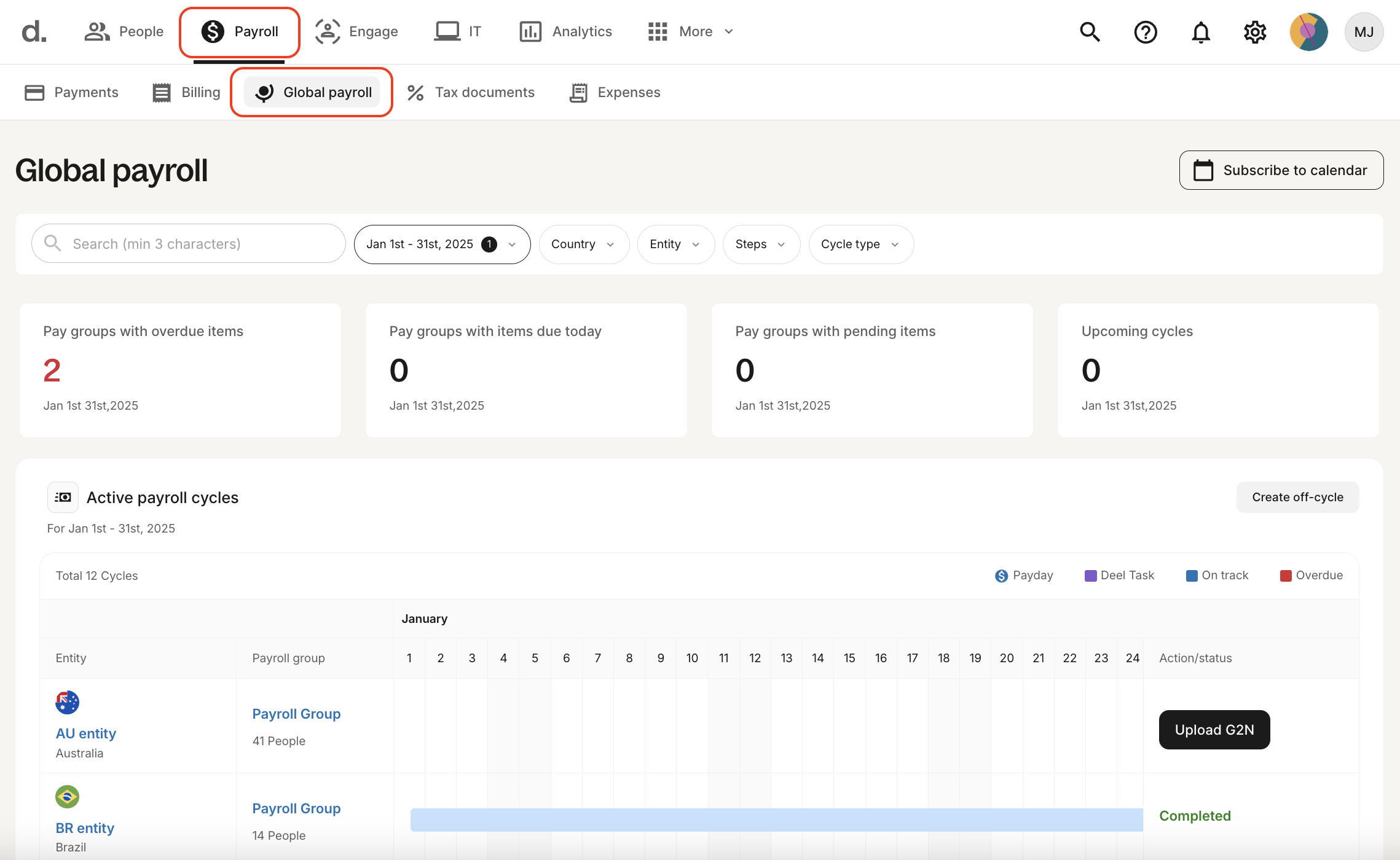
Deel hat sich auf globale Lohnabrechnung und Compliance für verteilte Teams spezialisiert, statt als umfassendes HRIS zu dienen. Die Plattform hilft Unternehmen, freie und festangestellte Mitarbeitende in mehr als 150 Ländern einzustellen, zu bezahlen und zu verwalten. Deel bewältigt die Komplexität internationaler Compliance, Verträge und Zahlungen und ist dadurch besonders wertvoll für Unternehmen, die remote-first oder global verteilte Belegschaften aufbauen.
Wichtige Funktionen
- Globale Lohnabrechnungsverarbeitung in über 150 Ländern
- Verwaltung von Zahlungen an freie Mitarbeitende mit automatisierter Rechnungsstellung
- Konforme Arbeitsverträge für mehrere Rechtsräume
- Visa- und Immigrationsunterstützung für internationale Einstellungen
- Equipment-Verwaltung für Remote-Mitarbeitende
- Time Tracking und Spesenmanagement
- Compliance-Überwachung und rechtliche Updates nach Land
Vorteile
- Vereinfacht das Einstellen und Bezahlen internationaler Teammitglieder erheblich
- Bewältigt komplexe Compliance-Anforderungen über mehrere Länder hinweg
- Schnelles Onboarding sowohl für freie als auch für festangestellte Mitarbeitende
- Flexible Zahlungsoptionen, einschließlich mehrerer Währungen
- Starke Compliance-Expertise reduziert rechtliche Risiken
- Skaliert gut, wenn Unternehmen in neue Länder expandieren
- Guter Kundensupport für Fragen zur internationalen Beschäftigung
Einschränkungen
- Begrenzte Funktionen für Performance Management oder Mitarbeitendenentwicklung
- Nicht als vollwertiges HRIS für rein nationale Teams konzipiert
- Die Preise können sich bei großen internationalen Belegschaften schnell summieren
Am besten geeignet für
Unternehmen mit verteilten globalen Teams, die internationale Unterstützung bei Lohnabrechnung und Compliance benötigen.
So wählt ihr die richtige ADP-Alternative für eure Organisation
Bevor ihr eine endgültige Entscheidung über eine HR-Software trefft, stellt sicher, dass ihr Folgendes tut. Diese Schritte stellen sicher, dass die von euch gewählte ADP-Alternative dafür gebaut ist, mit eurer HR-Funktion zu skalieren.
Identifiziert aktuelle Lücken in Lohnabrechnungsprozessen und Entscheidungsfindung
Getrennte Payroll-Systeme schaffen blinde Flecken, die eure Fähigkeit einschränken, fundierte Entscheidungen über eure Belegschaft zu treffen. Wenn die Lohnabrechnung getrennt von Performance Management, Engagement-Daten und Lerninitiativen läuft, fällt es HR-Teams schwer, Vergütungsentscheidungen mit den tatsächlichen Beiträgen der Mitarbeitenden zu verknüpfen oder Muster zwischen Pay Equity und Mitarbeitendenbindung zu erkennen.
Diese Lücken hindern euch daran, die ganze Geschichte hinter Workforce-Trends zu verstehen, und erschweren es, Budgetanfragen zu rechtfertigen oder den ROI von People-Initiativen nachzuweisen. Überlegt daher, eine HR-Software zu wählen, die sich nativ mit euren zentralen HR-Daten integriert, etwa ein HRIS. Alternativ stellt sicher, dass sie sich nahtlos in euren bestehenden Tech-Stack integriert.
Vergleicht Flexibilität und Konfiguration mit dem bestehenden Stack
Starre Systeme schaffen Reibung, während sich eure Organisation weiterentwickelt. Wenn ihr eine unflexible Plattform wählt und dann skaliert, an neuen Standorten einstellt oder Vergütungsstrukturen anpasst, werdet ihr zu Umwegen gezwungen, die Abläufe verlangsamen und euer Fehlerrisiko erhöhen.
Die von euch gewählte ADP-Alternative sollte sich entweder reibungslos in euren bestehenden Tech-Stack integrieren oder mehrere Tools ersetzen, um HR-Daten und -Prozesse zu konsolidieren. Überlegt, ob sich die Plattform an eure Workflows anpassen kann, statt euch zu zwingen, euch an ihre Grenzen anzupassen. Tools, die umfangreiche Anpassungen erfordern oder denen es an API-Flexibilität fehlt, werden auf lange Sicht für Ärger sorgen.
Entscheidet, wie ihr Payroll-Daten verarbeiten und nutzen möchtet
Moderne HRIS-Plattformen behandeln Payroll-Daten als strategische Informationen statt als transaktionalen Datensatz. Wenn die Lohnabrechnung mit Performance Reviews, Engagement-Umfragen und der Teilnahme an Lernangeboten verbunden ist, könnt ihr Muster zwischen Vergütungsentscheidungen und Bindungsergebnissen erkennen, Pay-Equity-Lücken identifizieren, bevor sie zu Problemen werden, und datengestützte Entscheidungen über Gehälter oder Bonusstrukturen treffen.
Wenn ihr ADP-Alternativen bewertet, berücksichtigt eure Anforderungen an die Lohnabrechnung und eure Vorbereitungs-Workflows. Wird sich eure gewählte HR-Software gut in diese Workflows integrieren oder sie ersetzen? Wenn die Antwort „nein“ lautet, droht euch auf lange Sicht Frust.
Eine ADP-Alternative wählen, die mit eurer People-Strategie skaliert
Moderne HR-Teams brauchen Systeme, die die Lohnabrechnung mit der breiteren Employee Experience verbinden, statt Tools, die isoliert arbeiten. Payroll-first-Plattformen wickeln Transaktionen effizient ab, lassen euch aber Performance Reviews in einem System, Engagement-Umfragen in einem anderen und Lerninitiativen in einem dritten verwalten. Diese Fragmentierung macht es nahezu unmöglich zu verstehen, wie die verschiedenen Teile der HR-Funktion zusammenwirken.
Vereinte HRIS-Plattformen wie Leapsome verfolgen einen anderen Ansatz. Sie behandeln die Lohnabrechnung als eine Komponente eines vernetzten People-Operations-Systems, in dem Vergütungsentscheidungen direkt mit Performance-Daten verbunden sind, Engagement-Insights Bindungsstrategien speisen und Payroll-Reports zur Workforce Planning beitragen. Diese Integration bietet die Klarheit und Flexibilität, die wachsende Organisationen brauchen, um effektiv zu skalieren.
🚀 Bereit, über eigenständige Lohnabrechnung hinauszugehen?
Leapsome hilft HR-Teams, Lohnabrechnungsabläufe mit der gesamten Employee Experience zu verbinden.
👉 Demo buchen
Häufig gestellte Fragen zu ADP-Alternativen
Was sind die besten ADP-Alternativen für mittelständische Unternehmen?
Payroll-first-Tools wie Gusto funktionieren gut für unkomplizierte Anforderungen, während vereinte HRIS-Plattformen wie Leapsome eine tiefere Funktionalität bieten, die die Lohnabrechnung mit Performance Management, Engagement und Lernen verbindet. Überlegt, ob ihr eine Plattform wollt, die einfach nur die Lohnabrechnung verarbeitet, oder eine, die Vergütungsentscheidungen mit breiteren People-Initiativen verknüpft.
Wie schneiden ADP-Alternativen bei Preisen und langfristigen Kosten ab?
Der anfängliche Preis spiegelt selten die Gesamtbetriebskosten wider, wenn ihr ADP-Alternativen bewertet. Einige berechnen Pauschalpreise, die die zentralen Funktionen einschließen, während andere eine modulare Preisgestaltung nutzen, bei der wesentliche Fähigkeiten extra kosten. Wenn ihr Kosten vergleicht, bezieht Implementierungszeit, Schulungsanforderungen und die Frage mit ein, ob die Plattform den Verwaltungsaufwand für euer Team reduziert oder erhöht.
Kann ein HRIS die ADP-Lohnabrechnung vollständig ersetzen?
Manchmal, aber nicht immer. Das beste HRIS hilft euch beim Start, indem es zentrale HR-Daten und Time-Tracking-Informationen mit eurer bevorzugten Payroll-Plattform integriert. Aber wahrscheinlich werdet ihr eine Payroll-Software wollen, die die Verarbeitung übernimmt.
Wie lange dauert der Wechsel von ADP zu einer anderen Plattform?
Migrationszeiträume hängen von der Unternehmensgröße, der Komplexität der Lohnabrechnung und den Integrationsanforderungen ab. Kleine Unternehmen mit unkomplizierter Lohnabrechnung können typischerweise innerhalb von 4 bis 6 Wochen wechseln, während mittelständische Organisationen mit bundesstaatenübergreifenden Betrieben oder komplexen Benefits-Strukturen 2 bis 3 Monate benötigen können.
Zentrale Faktoren sind die Genauigkeit der Datenübertragung, das Testen von Lohnabrechnungsläufen vor dem Go-live, die Schulung eures Teams und eurer Mitarbeitenden sowie das zeitliche Abstimmen des Wechsels auf die Abrechnungszyklen. Stellt sicher, dass euer bevorzugter Anbieter ein starkes Kundensupport-Team hat, denn das macht den Implementierungsprozess weitaus reibungsloser.
Was sollten HR-Teams prüfen, bevor sie ADP ersetzen?
Beginnt mit der Flexibilität: Kann sich die Plattform an eure Workflows anpassen, oder müsst ihr Prozesse ändern, damit sie zur Software passen? Bewertet die Integrationsfähigkeiten mit eurem bestehenden Tech-Stack, besonders mit Buchhaltungssystemen, Benefits-Anbietern und Time-Tracking-Tools. Prüft die Reporting-Funktionalität, um sicherzustellen, dass ihr die Insights extrahieren könnt, die ihr für Workforce Planning und die Rechtfertigung von Budgets braucht.
Am wichtigsten: Bewertet anhand zukünftiger Anforderungen, nicht nur anhand aktueller Schmerzpunkte. Eure Anforderungen werden sich weiterentwickeln, während ihr skaliert, neue Märkte erschließt oder Vergütungsstrategien anpasst.
Leapsome Team

.jpg)
.jpg)

.jpg)
.jpg)