Unlimited PTO: strategischer Benefit oder kulturelles Risiko?


Unlimited Paid Time Off (PTO) ist heiß begehrt. 43% der Beschäftigten finden, dass alle Unternehmen Unlimited PTO anbieten sollten. 19% würden ein Jobangebot ablehnen, wenn dieser Benefit fehlt.* Das Konzept ist einfach: Statt einer festen Anzahl freier Tage nehmen Mitarbeitende, was sie brauchen, wenn sie es brauchen. Im Vertrauen darauf, dass Flexibilität Leistung stärkt, nicht schwächt.
Unlimited PTO ist aber kein Selbstläufer, nur weil das Konzept beliebt ist. Themen wie Untergebrauch und unklare Erwartungen müsst ihr adressieren, bevor dieser Policy-Typ seine Versprechen einlösen kann.
Dieser Artikel gibt euch einen strukturierten Ansatz, um zu bewerten, ob Unlimited PTO strategisch zu eurer Organisation passt.
*SHRM, 2024
Was ist Unlimited PTO?
Unlimited PTO (auch Discretionary PTO oder Flexible PTO genannt) ist eine Urlaubs-Policy ohne offizielle Obergrenze für die freien Tage, die Mitarbeitende nehmen können.
Wie funktioniert Unlimited PTO in der Praxis? Statt das Jahr mit einer festen Anzahl Urlaubs- und Krankheitstage zu starten, nehmen Mitarbeitende frei, wann es für sie passt, mit Freigabe durch ihre*n Manager*in. Da kein PTO angesammelt wird, gibt es typischerweise auch keine Auszahlung für ungenutzte Urlaubstage zum Jahresende oder beim Offboarding.
Die Trade-offs: Pro und Contra von Unlimited PTO
„People-first heißt nicht Business-last. Wenn ihr Mitarbeitenden Raum zum Denken und Handeln gebt, schaltet ihr Leistung, Loyalität und Innovation frei.“
– Luck Dookchitra, ehemals VP of People & Culture bei Leapsome
Bevor ihr große Entscheidungen trefft, die eure HR-Prozesse umkrempeln, braucht ihr ein vollständiges Bild des Impacts. Auf den ersten Blick klingt Unlimited PTO nach einer guten Idee. Sie hat aber ihre Schattenseiten.
Was für Unlimited PTO spricht
Starten wir mit dem Positiven. Die wichtigsten Vorteile von Unlimited PTO:
- Top-Talente anziehen und halten: Unlimited PTO positioniert eure Organisation als zeitgemäß und offen für Neues, das die Employee Experience verbessern kann.
- Bessere Work-Life-Balance: Unbegrenzte Urlaubstage heißt, dass Mitarbeitende (theoretisch) freinehmen können, wann sie es brauchen, ohne ihr PTO-Konto im Blick haben zu müssen.
- Kein Dezember-Stau: Das Jahresende wird oft hektisch, weil Mitarbeitende noch schnell angesammelte Urlaubstage aufbrauchen, die nicht übertragen werden. Unlimited PTO löst diesen Druck und reduziert das Risiko, dass zu viele Teammitglieder gleichzeitig (in einer ohnehin belasteten Phase) Urlaub nehmen.
- Einfachere Admin: Eine Unlimited-PTO-Policy bedeutet eine Sache weniger bei der Lohnabrechnung, weil ihr Mitarbeitende nicht für ungenutzte Tage entschädigen müsst.
Wo Unlimited-PTO-Policies stolpern
Auf der anderen Seite, das müsst ihr im Auge behalten:
- Untergebrauch von PTO: Paradoxerweise nehmen Mitarbeitende unter Unlimited PTO oft 10 bis 30% weniger Tage frei als unter einer klassischen Policy. HR muss dann aktiv ermutigen, genügend Zeit zur Erholung zu nehmen und Burnout zu vermeiden.
- Inkonsistente Anwendung: Diese Art von Policy legt die Verantwortung in die Hand der einzelnen Manager, die Urlaubsanträge nach eigenem Ermessen genehmigen oder ablehnen. Das führt zu Inkonsistenz, Ungerechtigkeit zwischen Teams und Frust bei Mitarbeitenden.
- Schwerere Kapazitätsplanung: Weil ihr nicht wissen könnt, wie viel Urlaub Mitarbeitende im Jahr nehmen, wird es schwieriger, Kapazitätsbedarf und Engpässe vorherzusagen.
- Widerstand bei Mitarbeitenden: Mitarbeitende gehen unterschiedlich mit bezahltem Urlaub um. Manche sparen PTO an, weil sie ungenutzte Tage lieber in Geld umwandeln. Wenn ihr diese und andere Optionen kappt, können sich Mitarbeitende übergangen oder unterbewertet fühlen.
Noch nicht bereit für Unlimited PTO? Alternative Wege zu mehr Flexibilität
Wenn eine Unlimited-PTO-Policy nicht passt, ihr aber trotzdem eure Urlaubsstrategie modernisieren wollt, gibt es andere Optionen:
- Sabbaticals: Ein Sabbatical ist eine verlängerte Auszeit, die Mitarbeitende nach einer bestimmten Betriebszugehörigkeit verdienen können. Bezahlte Sabbaticals sind ein starker Loyalitätsanreiz und helfen langjährigen Mitarbeitenden, Burnout zu vermeiden. Für die Umsetzung braucht es klare Anspruchskriterien und einen Plan für den reibungslosen Betrieb während der Abwesenheit.
- Mindesturlaub: Setzt eine PTO-Untergrenze statt einer Obergrenze. Zum Beispiel mindestens zwei Wochen Urlaub pro Person und Jahr. Dieses Modell passt zu Organisationen, die Autonomie schätzen und Missbrauch verhindern wollen, gleichzeitig aber sicherstellen, dass alle regelmäßige Pausen machen.
- Floating Holidays: Floating Holidays bringen Flexibilität in klassische Policies, die auf Ansammlung basieren. Ein Kontingent freier Tage für persönliche, kulturelle oder religiöse Anlässe erweitert die Policy mit wenig Aufwand und ist eine praktische Geste der Wertschätzung für Diversität in großen oder internationalen Teams.
- Discretionary PTO: Statt PTO über das Jahr ansammeln zu lassen, stellt ihr alles ab dem 1. Januar zur Verfügung. Das ist ein Vertrauensvorschuss und lässt Mitarbeitende selbst entscheiden, wann sie ihre Tage nutzen. Gleichzeitig bleibt die Kapazitäts- und Finanzplanung berechenbar.
So setzt ihr eine Unlimited-PTO-Policy um: fünf Schritte
Wenn eine Unlimited-PTO-Policy scheitert, liegt das selten daran, dass Mitarbeitende das System ausnutzen. Meist liegt es an unklaren Erwartungen und inkonsistenter Anwendung. So baut ihr eine Policy, die im Alltag funktioniert.
1. Bewertet ehrlich, wo ihr steht
Unlimited PTO funktioniert nicht in jeder Organisation. Voraussetzung ist eine Vertrauenskultur, in der Mitarbeitende sicher freinehmen können, ohne Konsequenzen von oben zu fürchten. Eine Mitarbeiterumfrage kann zeigen, wie euer Team zu Unlimited PTO steht. Mögliche Fragen:
- Fühlt ihr euch wohl dabei, freinehmen, ohne Sorge vor Bewertung oder Karriere-Auswirkungen?
- Wie zuversichtlich seid ihr, dass eure Aufgaben während eurer Abwesenheit abgedeckt sind?
- Habt ihr genug Klarheit darüber, was eine „angemessene“ Menge an Urlaub in diesem Unternehmen ist?
- Wie oft spürt ihr Druck (ausgesprochen oder unausgesprochen), euer PTO nicht zu nehmen?
- Vertraut ihr darauf, dass Urlaub eure Performance Reviews oder Wachstumschancen nicht beeinträchtigt?
- Wie gut deckt unsere aktuelle Urlaubs-Policy eure persönlichen und familiären Bedürfnisse ab?
- Fühltet ihr euch mit einer flexiblen, unbegrenzten Policy mehr oder weniger unterstützt als mit einer festen Tageszahl?
Auch eine planbare Branche hilft. Wenn ein oder zwei Abwesenheiten gleichzeitig eine Abteilung aus dem Tritt bringen, passt Unlimited PTO eher nicht.
2. Baut Leitplanken und klärt Erwartungen
Klarheit ist alles. Arbeitet mit anderen HR-Verantwortlichen und Bereichsleitungen an einer umfassenden Policy. Elemente, die rein gehören:
- Wie der Freigabeprozess läuft: Wer Anträge genehmigt, wie Mitarbeitende sie einreichen und wie viel Vorlauf nötig ist.
- Wie ihr Kapazitätslücken handhabt: Wer Lücken erkennt und wie ihr sie schließt, ohne andere Teammitglieder unter Druck zu setzen.
- Dokumentation: Was wo festgehalten wird.
3. Macht eure Hausaufgaben, um Compliance-Risiken zu minimieren
Gesetzliche Compliance ist entscheidend, um audit-fest zu bleiben und Strafen zu vermeiden. In den USA gibt es keine bundesweiten PTO-Regeln, aber einzelne Bundesstaaten und andere Länder setzen eigene Standards.
Kalifornien beispielsweise behandelt PTO als verdienten Lohn, der bei Beendigung des Arbeitsverhältnisses ausgezahlt werden muss. Unlimited PTO ist trotzdem möglich, wenn ihr in Kalifornien sitzt (oder dort Mitarbeitende habt), ihr müsst es nur mit einer konformen Payroll-Abwicklung verbinden.
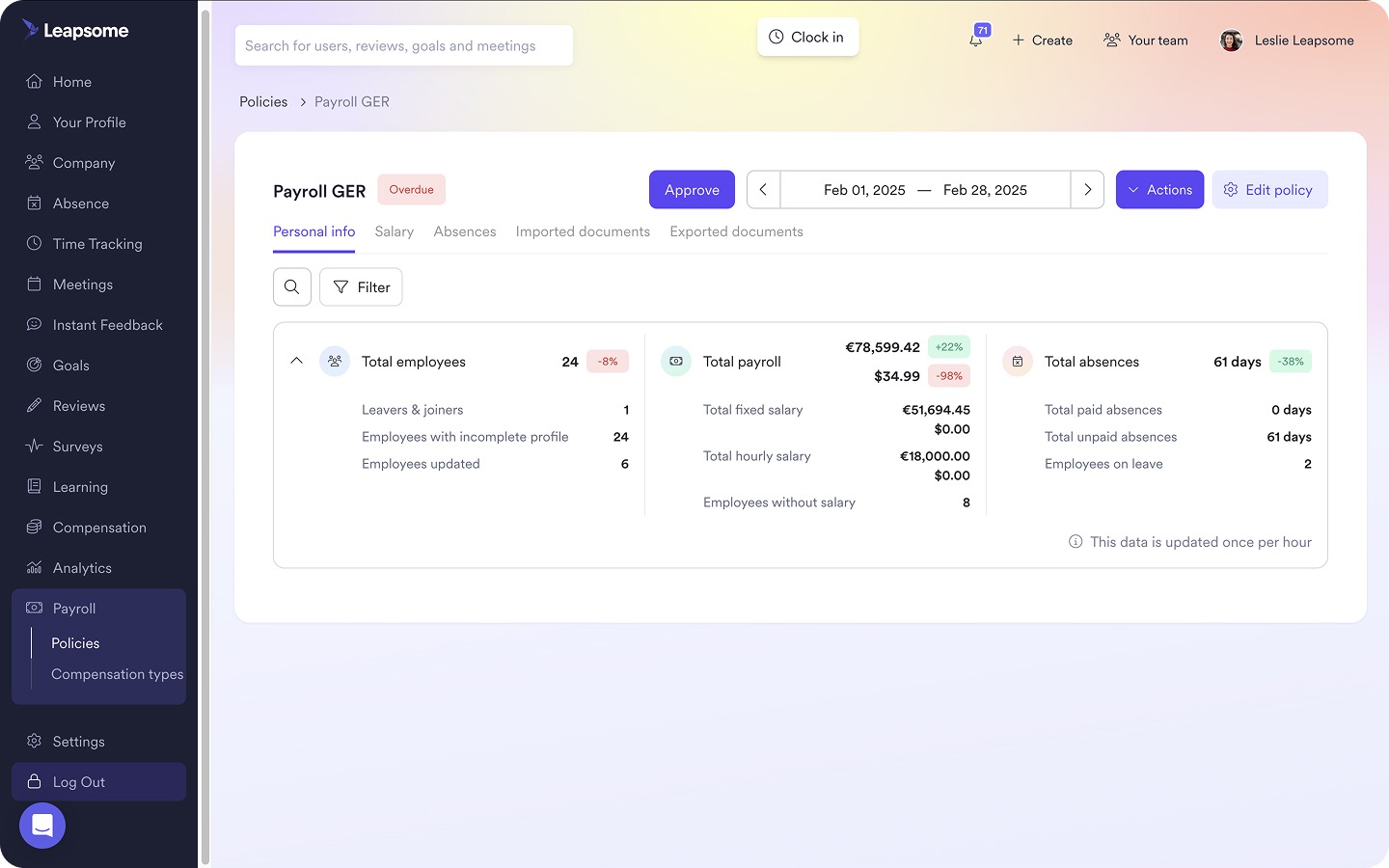
✈️ Payroll-Compliance auf Autopilot
Durch die Integration von Mitarbeiterprofilen, Abwesenheits-Tracking und Vergütungsdaten wird Compliance bei Leapsome zum Dauerbegleiter statt zur Notfallaktion.
👉 Schaut, wie Payroll Prep funktioniert
4. Reduziert Inkonsistenz, indem ihr Manager ausrichtet
„Manager können den Ton vorgeben, indem sie proaktiv nach Urlaub fragen und Leistung an Ergebnissen messen statt an Stunden.“
– Lin Grensing-Pophal, SHRM
Egal wie gut eure Policy dokumentiert ist: Risse entstehen unvermeidlich, wenn die Anwendung inkonsistent ist. Trainiert euer Management-Team auf:
- Ein standardisiertes Entscheidungs-Framework, um Bias zu minimieren und faire Behandlung zu sichern
- Aktiv Urlaub zu fördern, statt nur auf Anträge zu reagieren
- Burnout-Signale zu erkennen
- Genehmigungen und Ablehnungen sauber zu dokumentieren
5. Haltet den Motor am Laufen während Abwesenheiten
„Dashboards nehmen euch die Detektivarbeit ab. Wenn eine Führungskraft ein Bauchgefühl zu Abwesenheits-Spitzen hat, lässt sich das in Sekunden prüfen und handeln. Echtzeit schlägt monatsalte Exports jedes Mal.“
– Florian Klages, Managing Partner bei torq.partners
Sorgen um die Vertretung sind eine der größten Hürden für Unlimited PTO. Standardisierung entlastet. Definiert Prozesse, um anstehende Abwesenheiten zu verfolgen und Vertretung proaktiv zu planen, und klärt die Kommunikation zwischen Mitarbeitenden und Abteilungen.
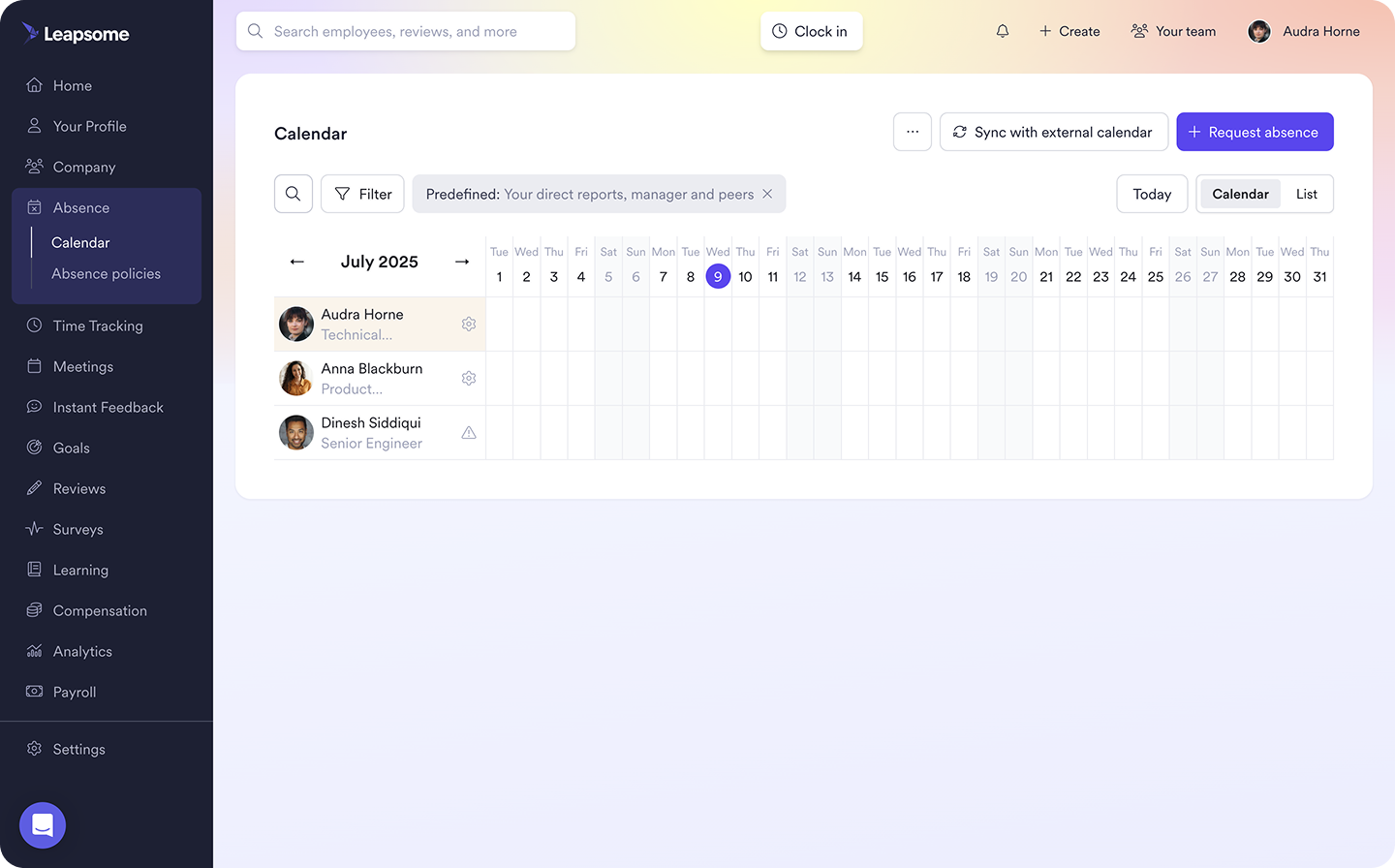
🕛 Plant Urlaub mit Präzision
Leapsome verfolgt Krankheits- und Urlaubstage an einem Ort. Das ermöglicht datengestützte Planung und vollständige Übersicht.
👉 Mehr über Abwesenheiten erfahren
Also, ist Unlimited PTO das Richtige?
Wenn ihr unsicher seid, ob Unlimited PTO der richtige Schritt ist, helfen ein paar einfache Fragen:
- Wenden Manager Policies konsistent und fair an?
- Können Teams Vertretung verlässlich planen?
- Könnt ihr Urlaubsdaten und Engagement-Trends verfolgen?
- Erlauben die Gesetze in eurer Jurisdiktion flexible Urlaubsmodelle?
Wenn alle Antworten „ja“ lauten, seid ihr wahrscheinlich gut aufgestellt. Sonst braucht ihr entweder eine andere Urlaubs-Policy oder zuerst noch etwas Vorarbeit.
Gebt eurer Unlimited-PTO-Policy Biss, mit Leapsome
Eure Urlaubs-Policy ist nur so gut wie das System, mit dem ihr sie umsetzt. Leapsome bringt alles zusammen, damit Unlimited PTO Mitarbeitende stärkt, statt HR neue Kopfschmerzen zu bereiten.
Von Performance Reviews und Mitarbeiterumfragen bis PTO-Tracking und Policy-Management: Leapsome bündelt alles, was ihr braucht, an einem Ort. So seid ihr Compliance- und Kultur-Themen immer einen Schritt voraus, mit zentralen Daten, die euch audit-fest halten und das Management eurer Policies spürbar erleichtern.
„Mitarbeitende finden jetzt alles an einem Ort: Daten, Abwesenheiten, Ziele und Reviews. Ich muss niemandem mehr erklären, welches Tool wofür ist. Alles läuft in Leapsome.“ – Merilyn L., Senior People Operations Specialist, Bob W
🏝️ Bringt euer PTO-Management ins 21. Jahrhundert
Leapsome verbindet Abwesenheitsmanagement, Mitarbeiterengagement-Tracking und Payroll-Compliance in einem Tool für nahtloses Urlaubs-Policy-Management.
👉 Demo anfragen
FAQ
Was ist der Unterschied zwischen FTO und PTO?
Flexible Time Off (FTO) ist eine spezielle Form von PTO, bei der Mitarbeitende so viel bezahlten Urlaub nehmen können, wie sie brauchen, mit Freigabe der*des Manager*in. FTO wird oft als Synonym für Unlimited PTO verwendet.
Wie viele Tage Urlaub pro Jahr sollten Mitarbeitende bei Unlimited PTO nehmen?
Auch mit einer Unlimited-PTO-Policy lohnt es sich, im Blick zu behalten, wie viel Zeit Mitarbeitende tatsächlich nehmen, und Erwartungen klar zu kommunizieren. Branchen variieren, aber Studien zeigen, dass etwa 12 Tage Mindesturlaub pro Jahr ideal für Wohlbefinden und Produktivität sind.